Total Pageviews

Copyright Theft

Copyright

All photographs are copyrighted.

Please do not copy or re-use without my WRITTEN permission.

Images published without consent is not permitted. I will procceed with court action on Copyright theft.

Copies maybe obtained upon request.

warshipsandauxiliares@yahoo.co.uk

Thank you

Monday, 28 May 2012

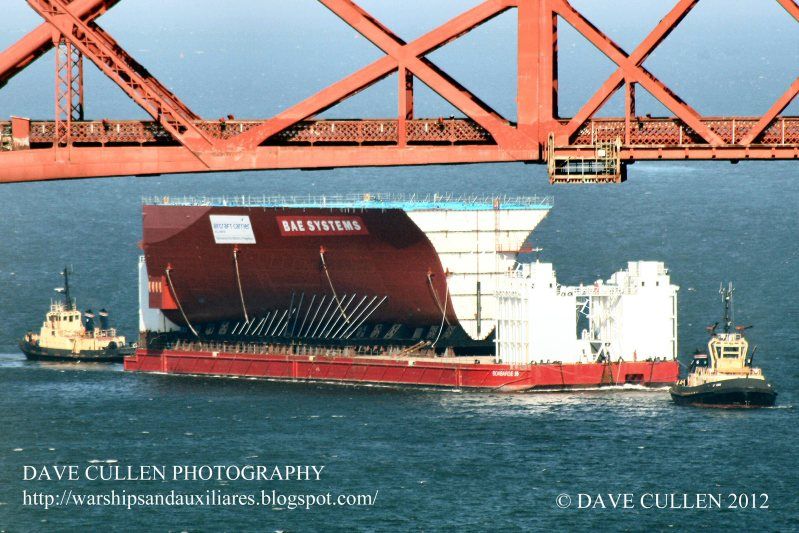
Lower Block 02


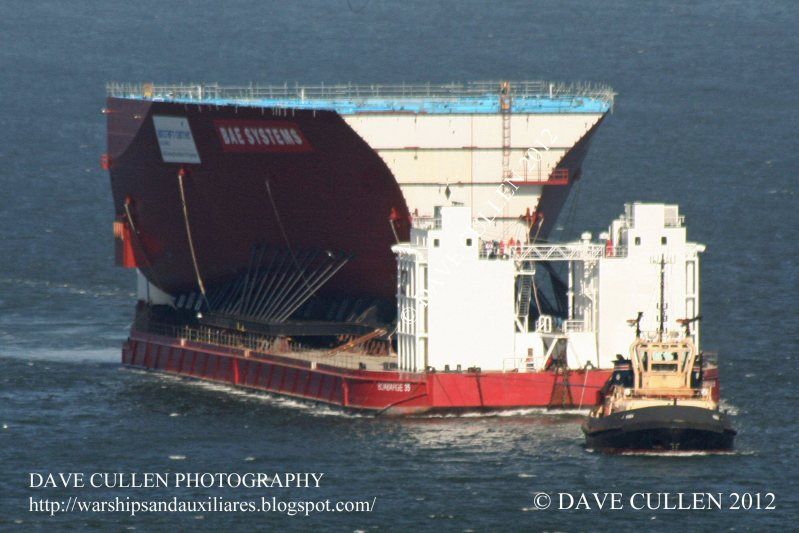
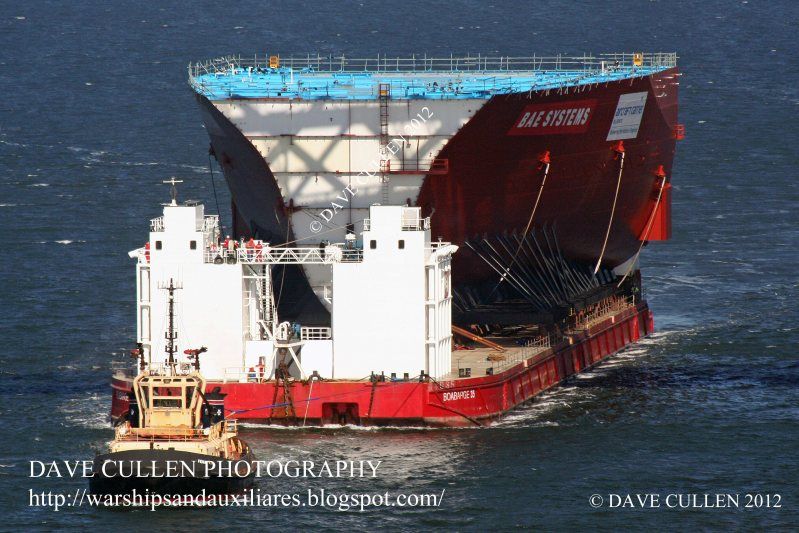
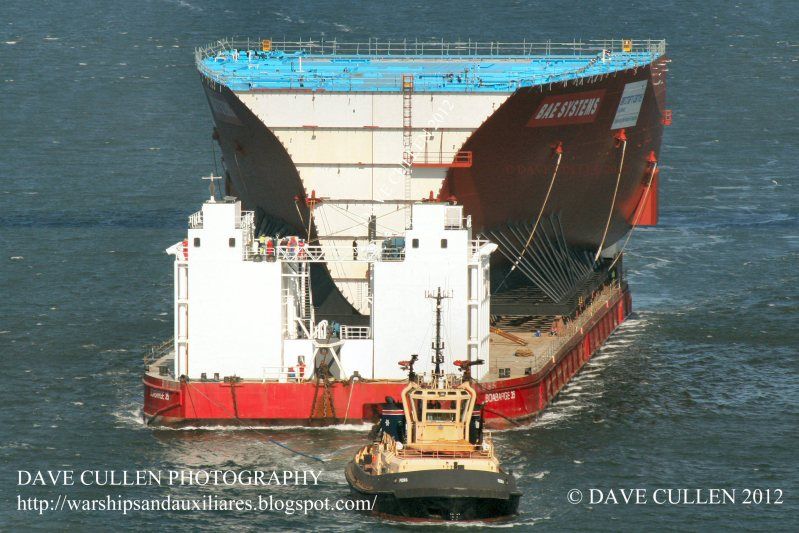
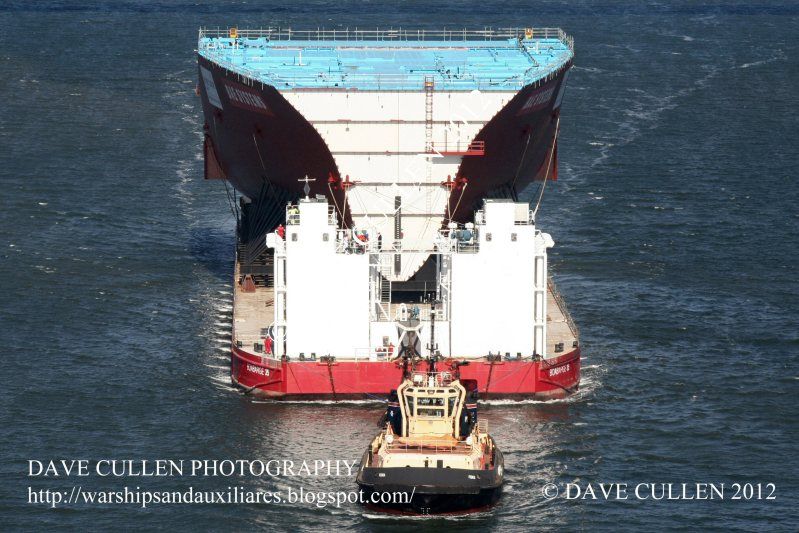
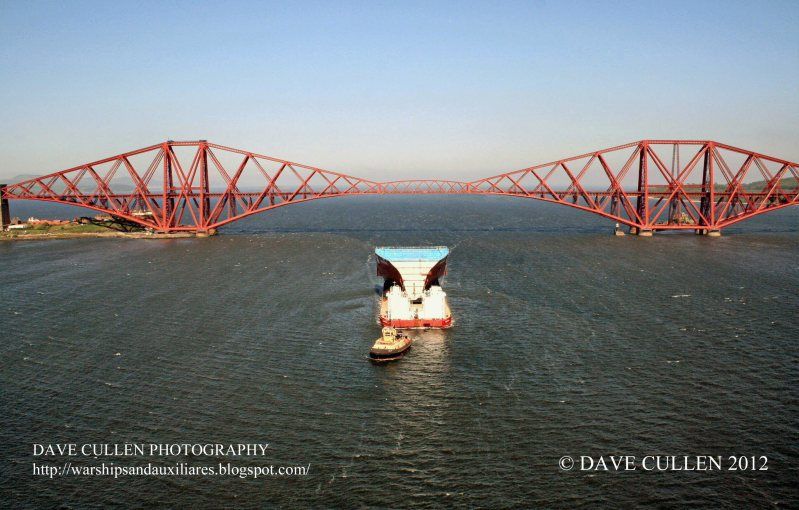
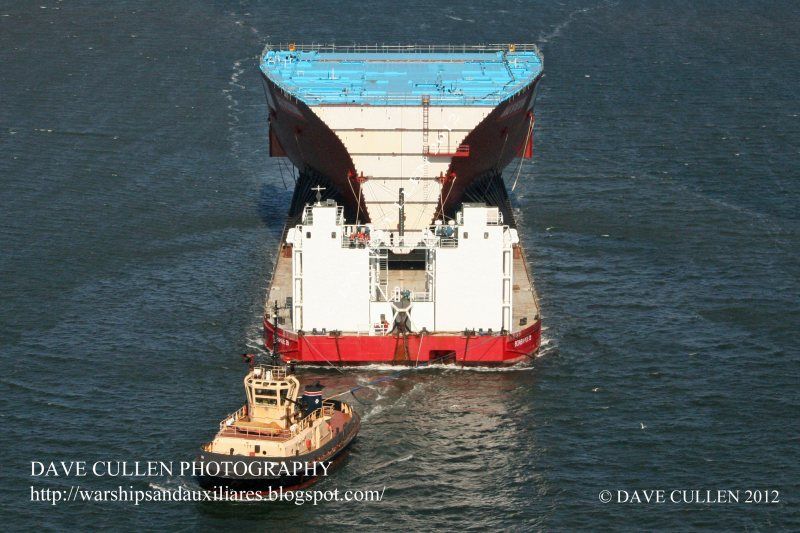
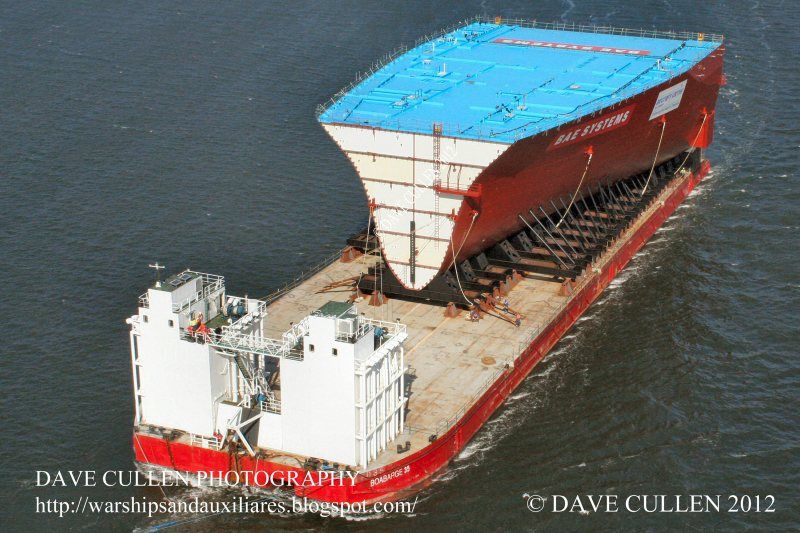
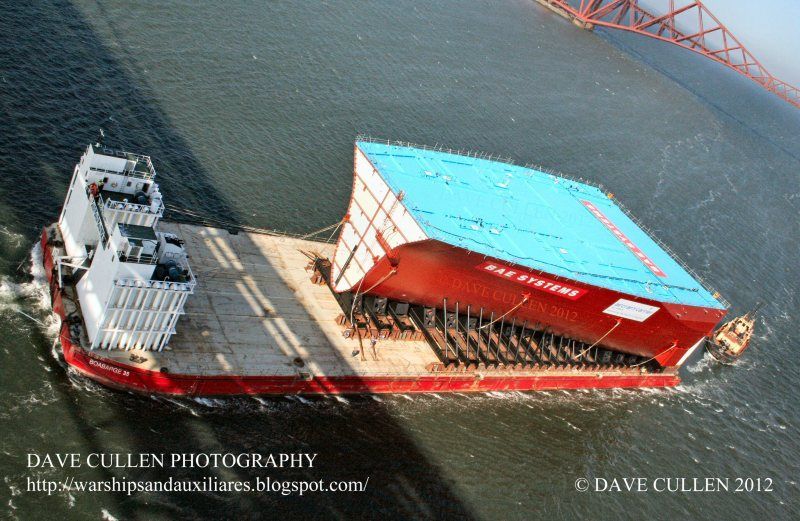
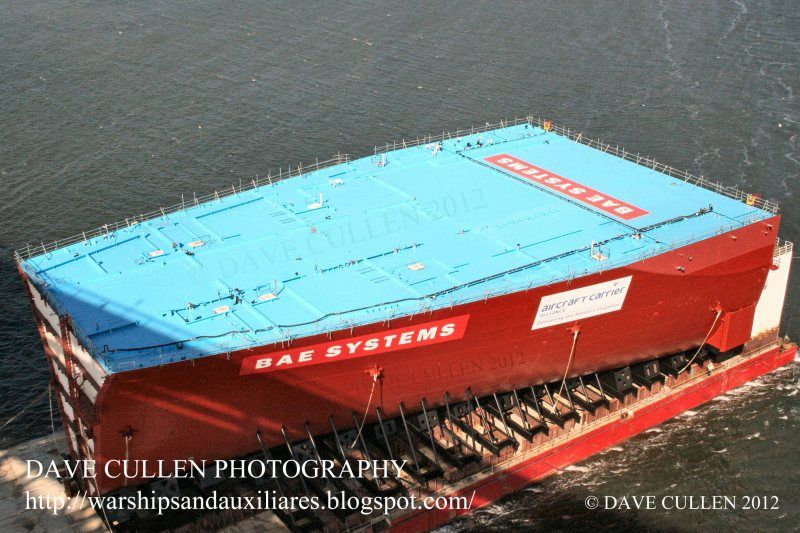
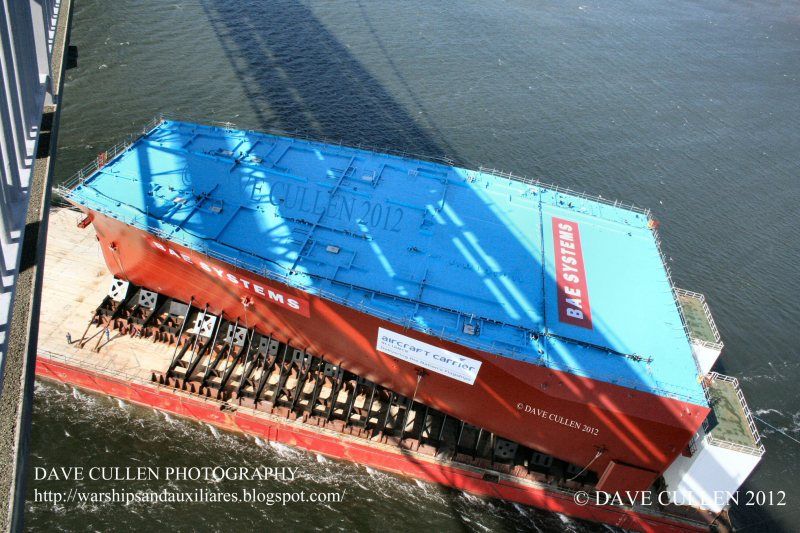
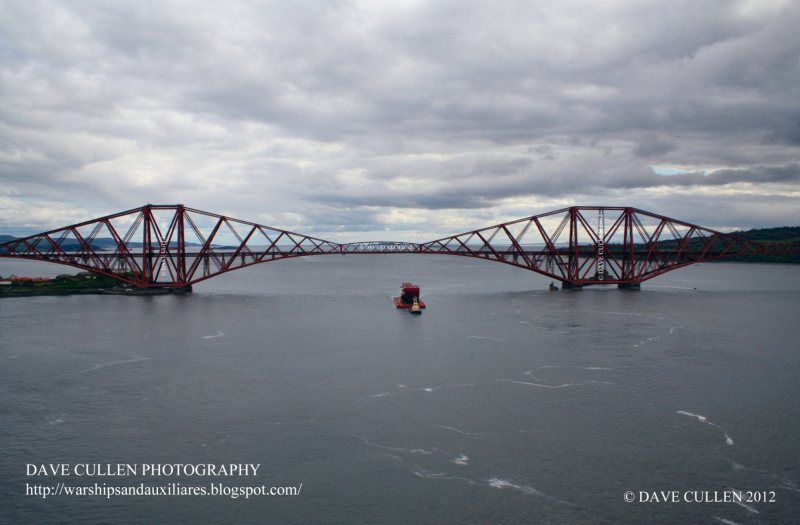
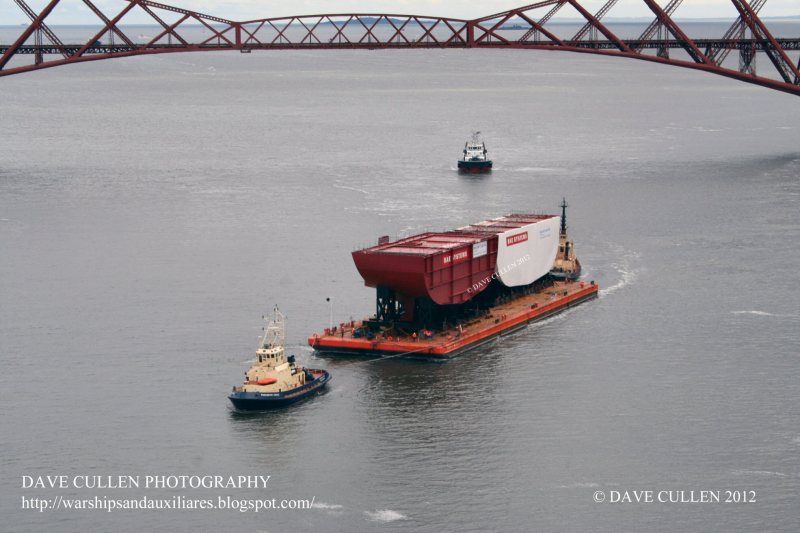
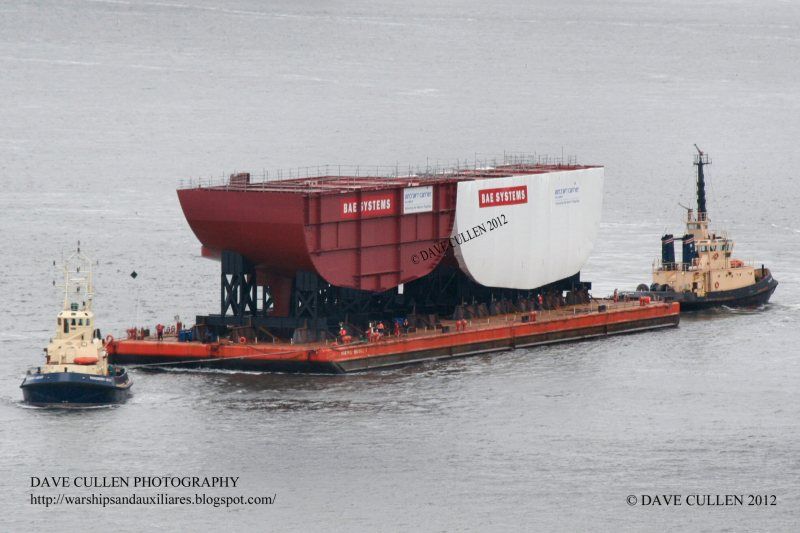
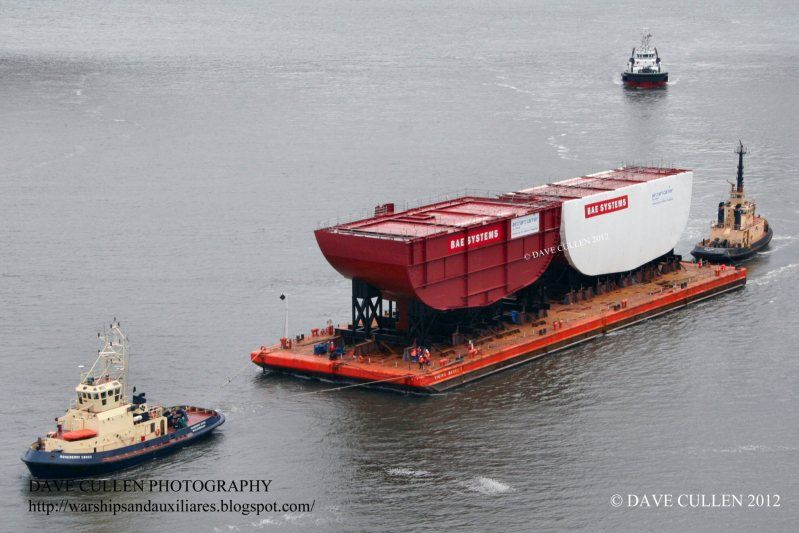
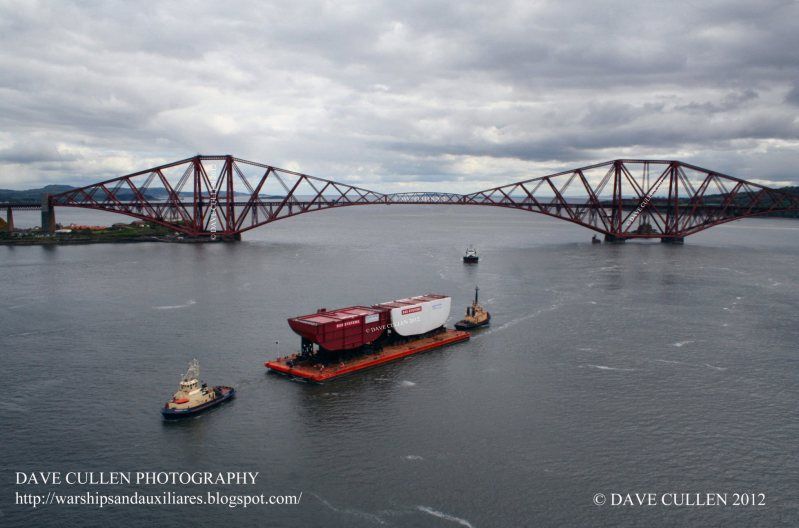
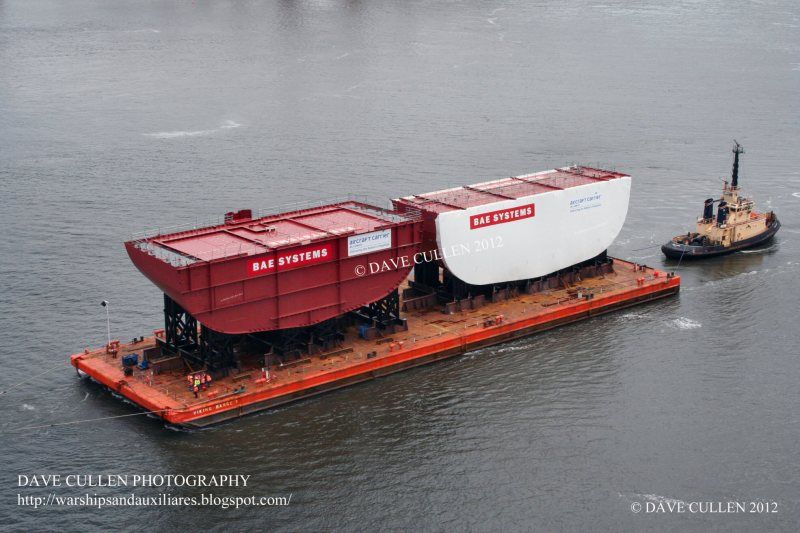
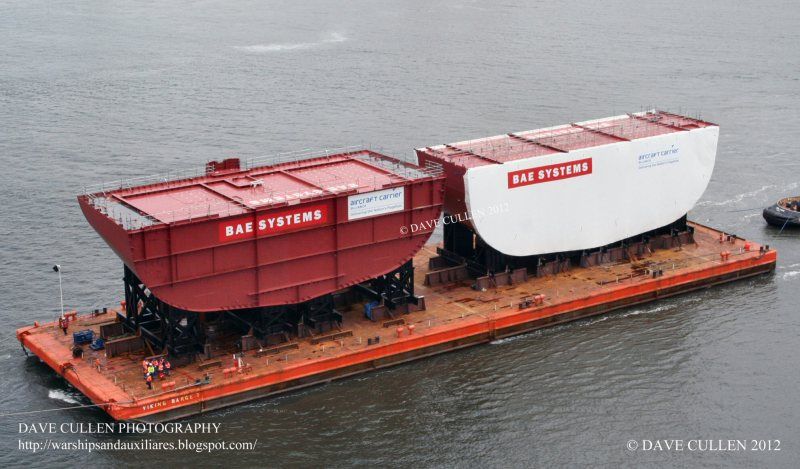
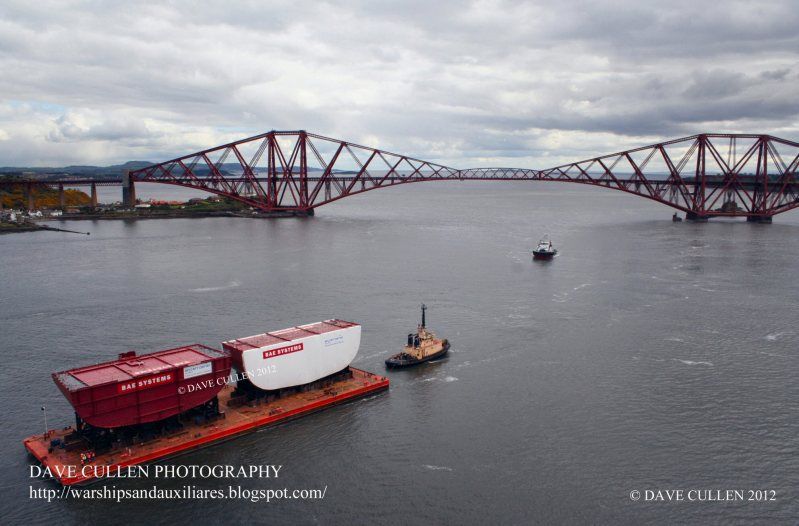
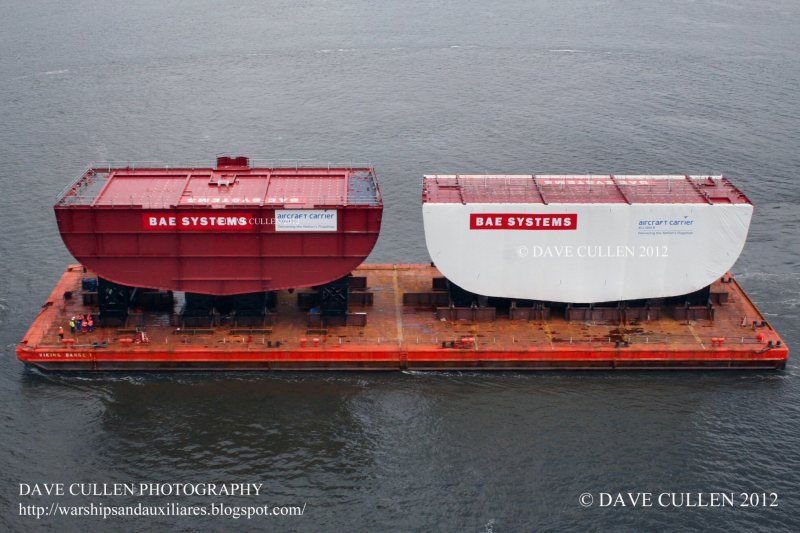
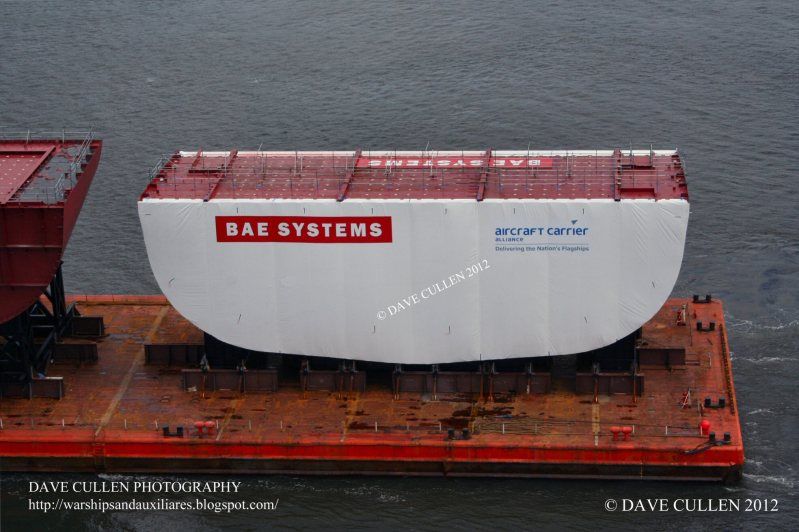
Seen below is a 6,000 ton section of aircraft carrier HMS Queen Elizabeth making stately progress under the Forth Bridges on Friday May 25 en-route to Babcock's Rosyth Dockyard.

The block - known as Lower Block 02 or LB02 - left BAE Systems’ Portsmouth yard, where it has been under construction for more than two years, on board a specialist sea-going barge last.

It makes up part of the lower section of the ship’s bow and stands over 20 meters high, 70 meters long and 40 meters wide.

LB02 is already fitted out to a very high standard. It houses everything from machine rooms to accommodation for some of the 650-strong crew.

The barge will sink and the block will be floated off. Meanwhile the Rosyth dry dock will be flooded and the 13,000 tonne section already under construction there will be floated out. LB02 will then be moved in, and the other section will be moved in behind it.

Once both sections are in place the dock will be drained and work to start integrating the sections will begin.

The aircraft carriers HMS Queen Elizabeth and HMS Prince of Wales are being delivered by the Aircraft Carrier Alliance, a unique partnering relationship between BAE Systems, Thales UK, Babcock and the UK Ministry of Defence.


Triparte Class Minehunter


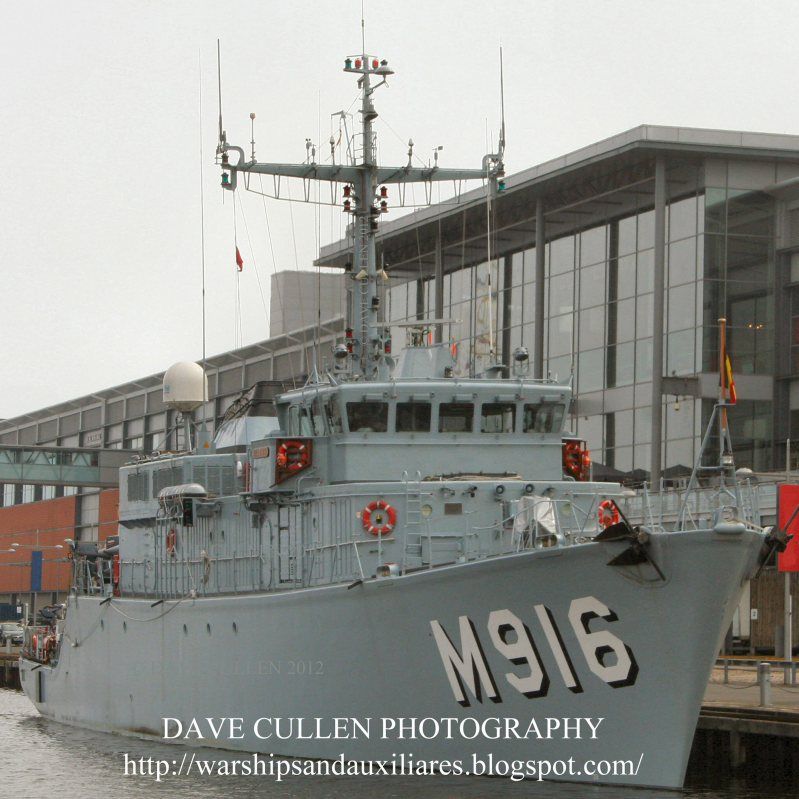
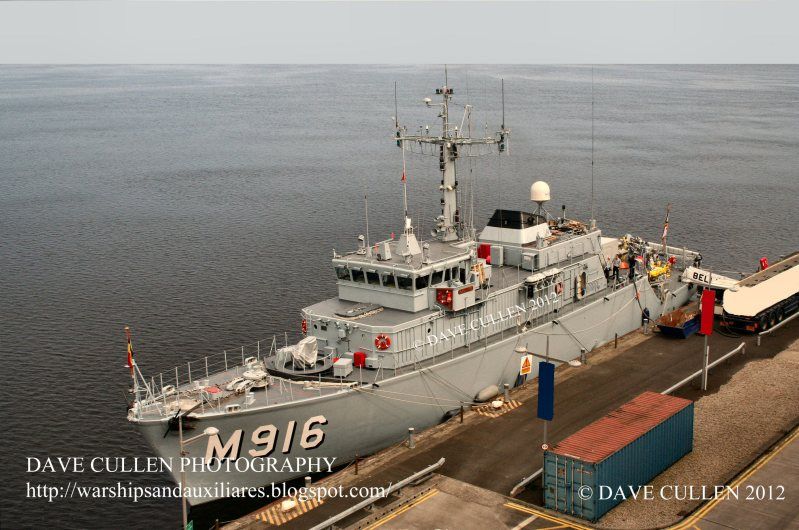
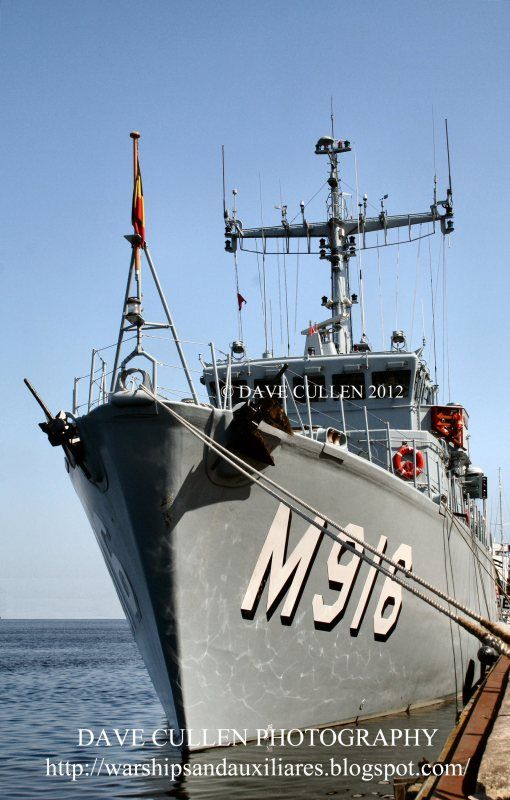
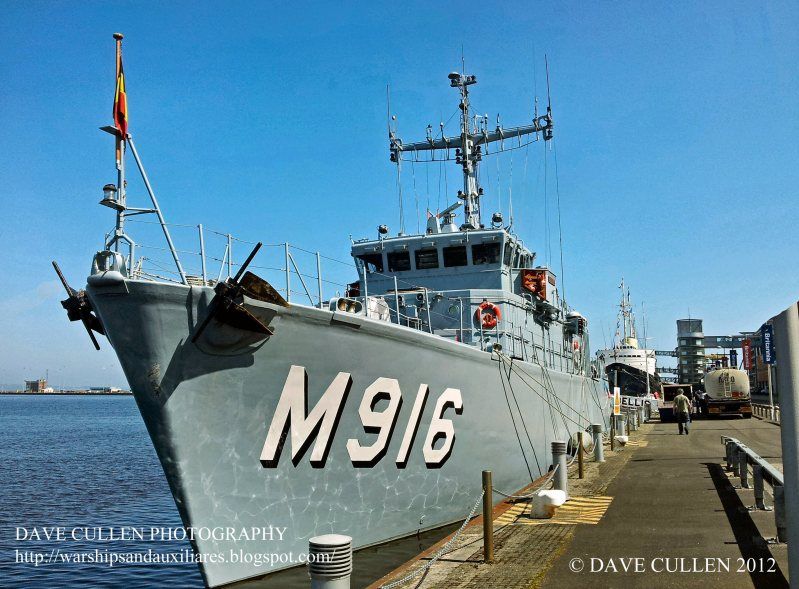
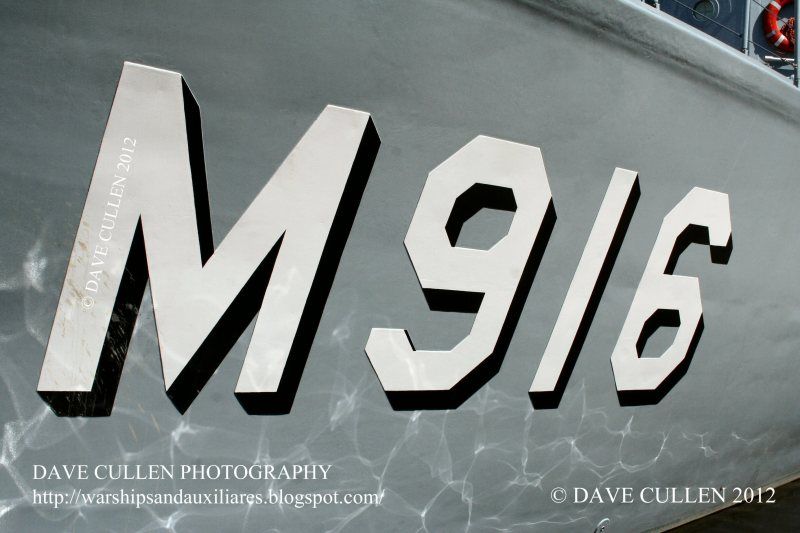
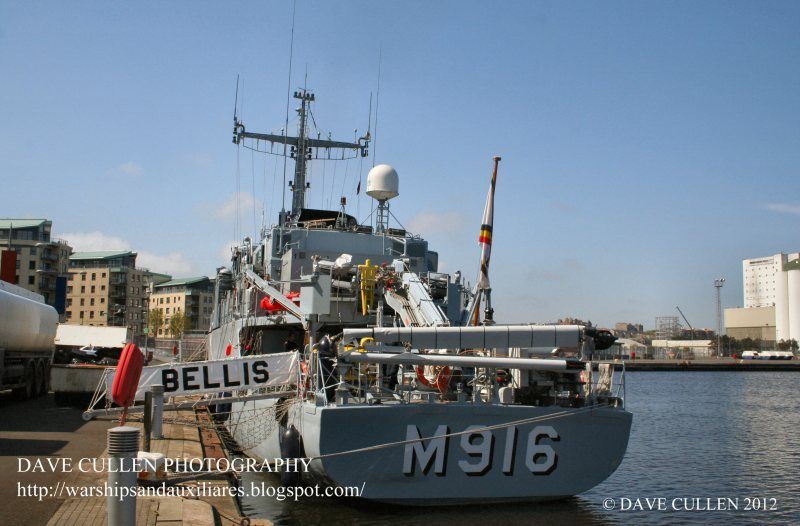
Belgian Minehunter BNS Bellis M916

A joint venture of the navies of France, Belgium, and the Netherlands, the Tripartite class of minehunters were conceived in the 1970s and built in the 1980s. France built the mine-hunting equipment, Belgium provided the electronics, and the Netherlands constructed the propulsion train. France and the Netherlands originally bought 15, with Belgium buying 10.

Originally the 10 ships were built for the Belgian navy. All remaining Belgian vessels have undergone an extensive upgrade during 2004-2008 involving replacement of the anti-mine warfare equipment. Also called "CMT" for Chasseur de Mines Tripartite, They are named after flowers and are thus sometimes called the "Flower" class in international literature.

Currently in service:

Aster               M915
Bellis               M916
Crocus             M917
Lobelia            M921
Narcis              M923
Primula            M924

Formerly:
Iris
M920
Sold to France
Verseau
M651
Fuchsia
M919
Sold to France
Céphée
M652
Dianthus
M918
Sold to France
Capricorne
M653
Myosotis
M922
Sold to Bulgaria
Tsibar
M900

Bellis (M916) is a Tripartite-class minehunter of the Belgian Naval Component, launched on 14 February 1986 at the Mercantile-Belyard shipyard in Rupelmonde and christened by Ellen Goffinet-Rosman, the wife of the then Mayor of Arlon, on 18 September 1986. The patronage of the Bellis was accepted by the city of Arlon. She is the second of the Belgian Tripartite-class minehunters.

Commissioned on 13 August 1986, the ship was involved in the rescue of the Herald of Free Enterprise in March 1987.

The Tripartite class is a class of mine warfare vessel used by the navies of Belgium, France, the Netherlands, as well as Pakistan, Indonesia, Latvia, and Bulgaria.

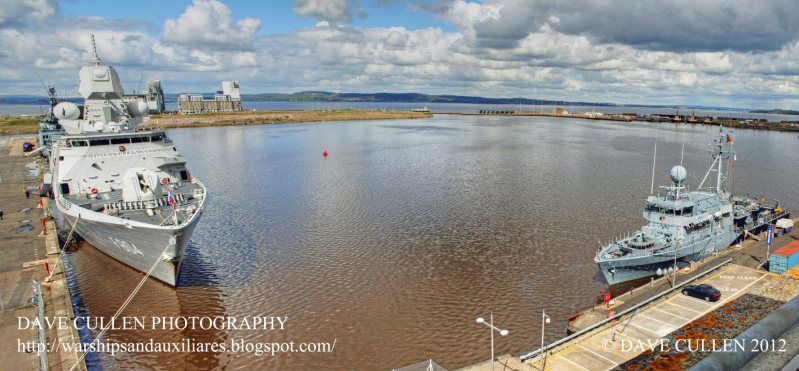
She is seen here arriving in Leith on Friday 25th May 2012:


Friday, 18 May 2012

Tourville Class Frigate


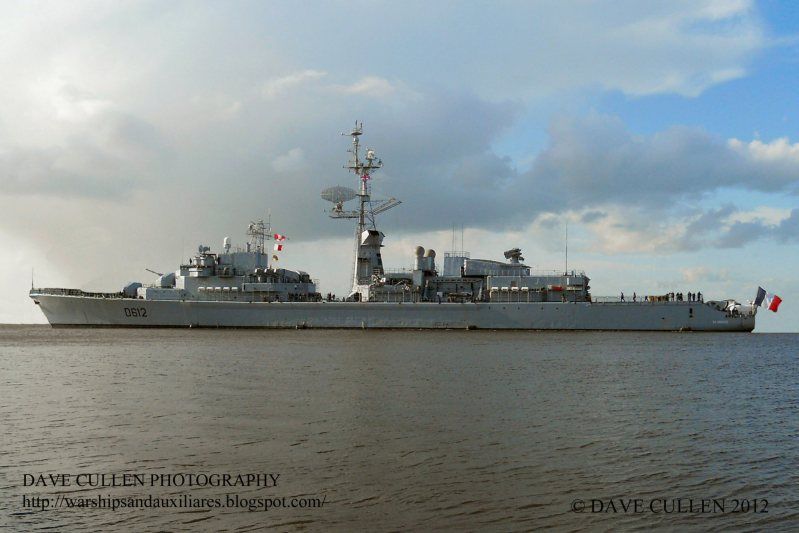
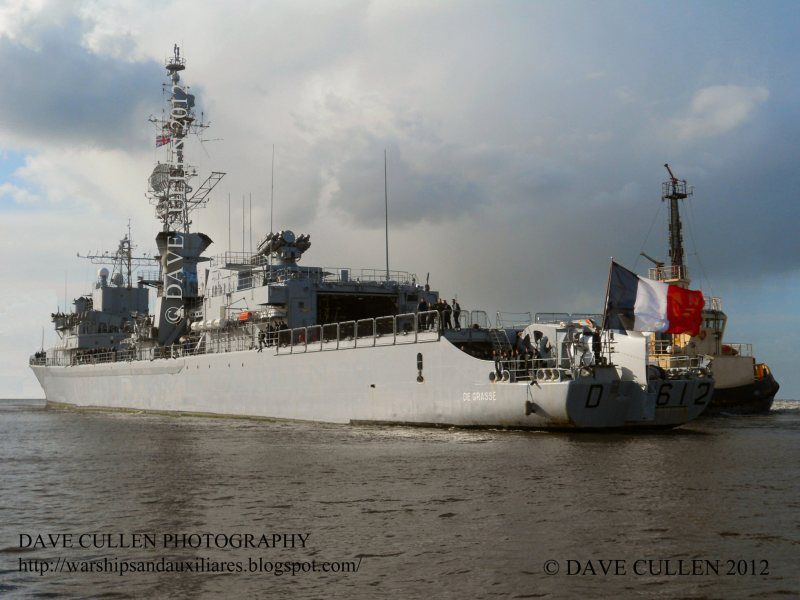
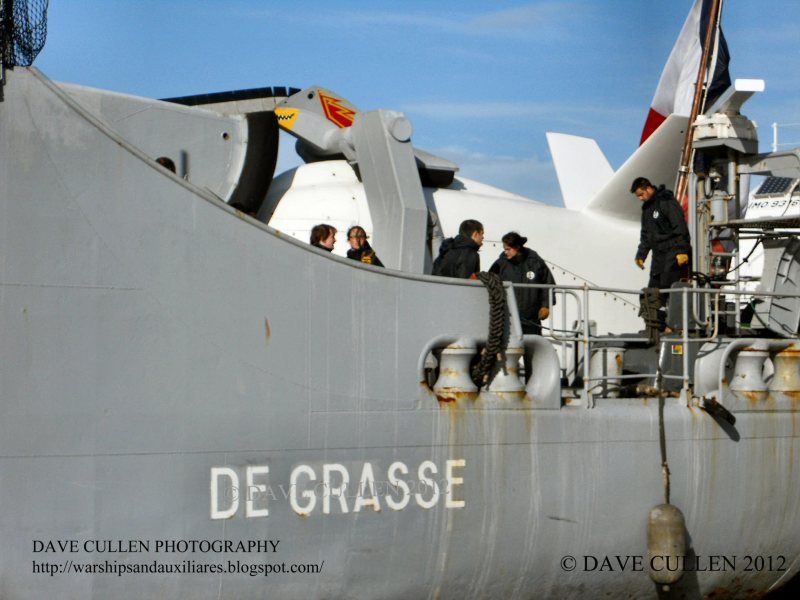
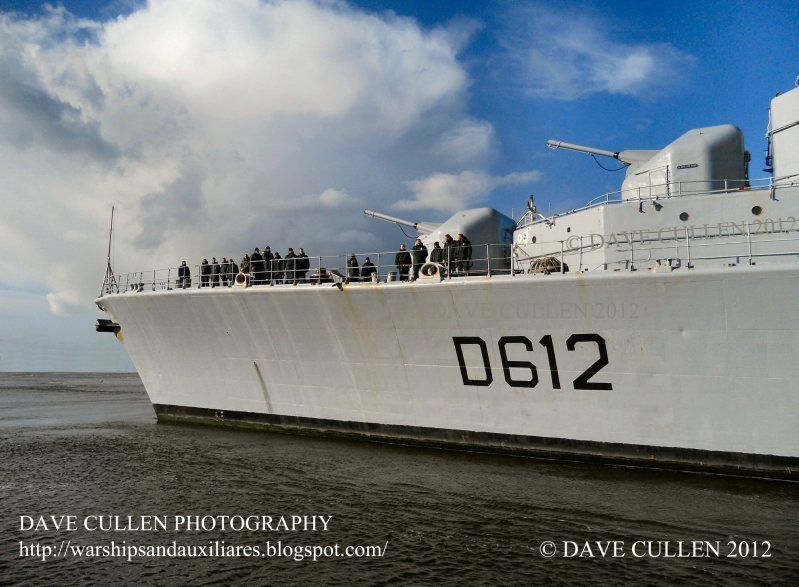
De Grasse

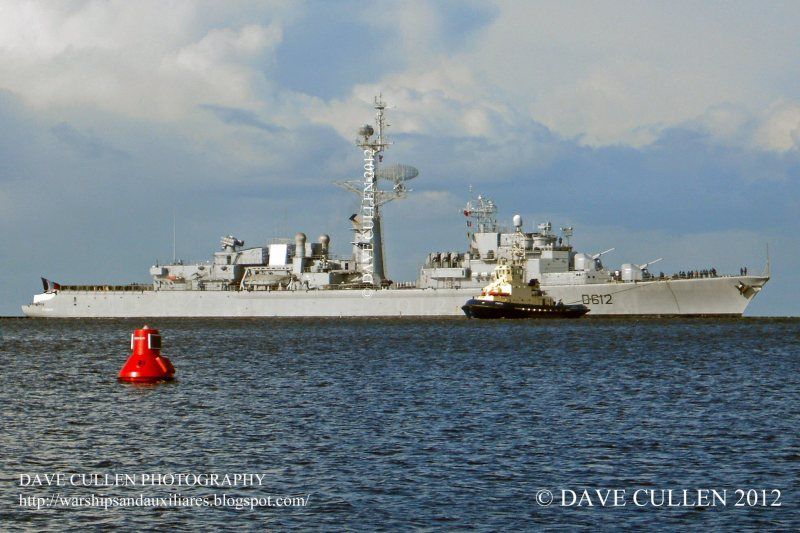
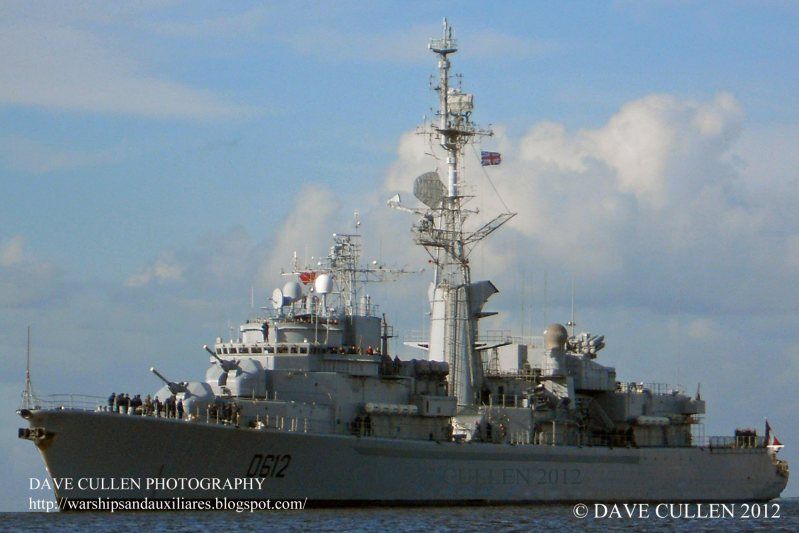
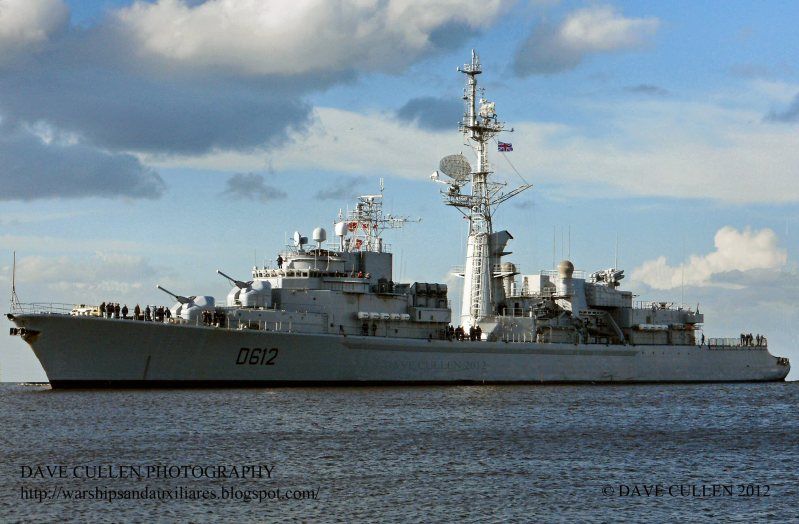
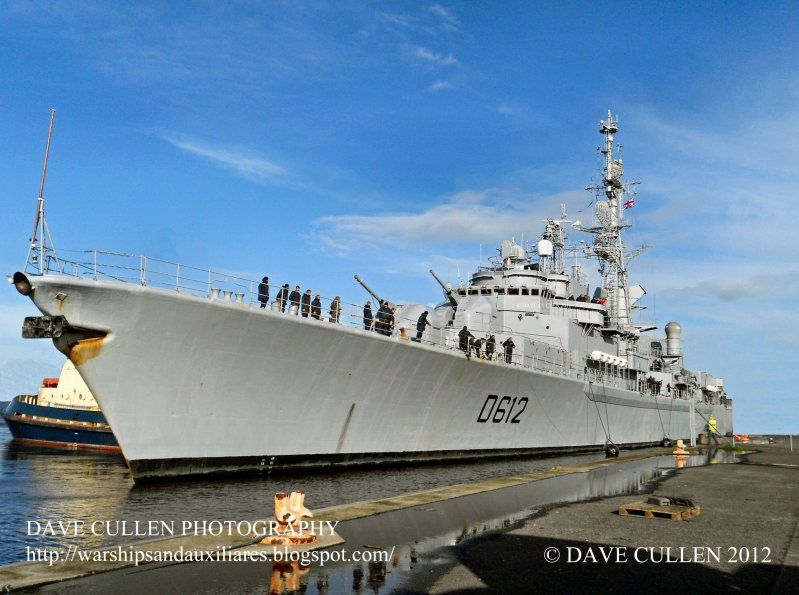
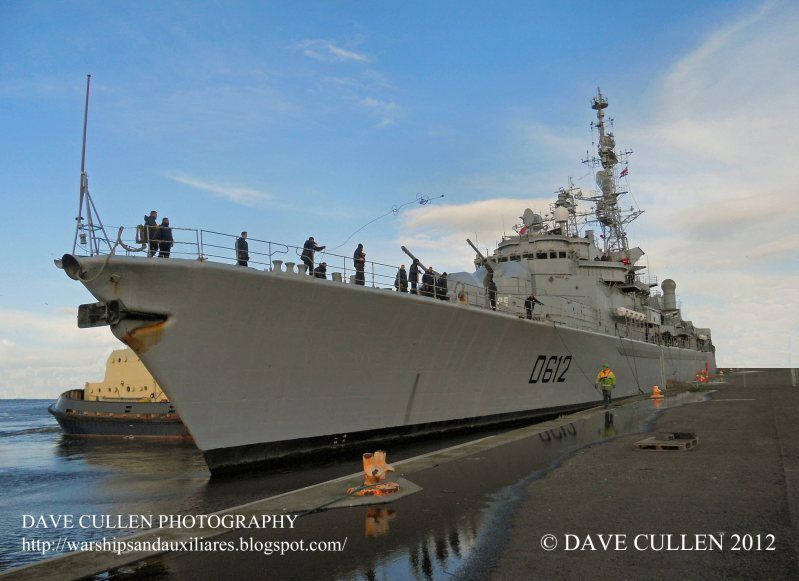
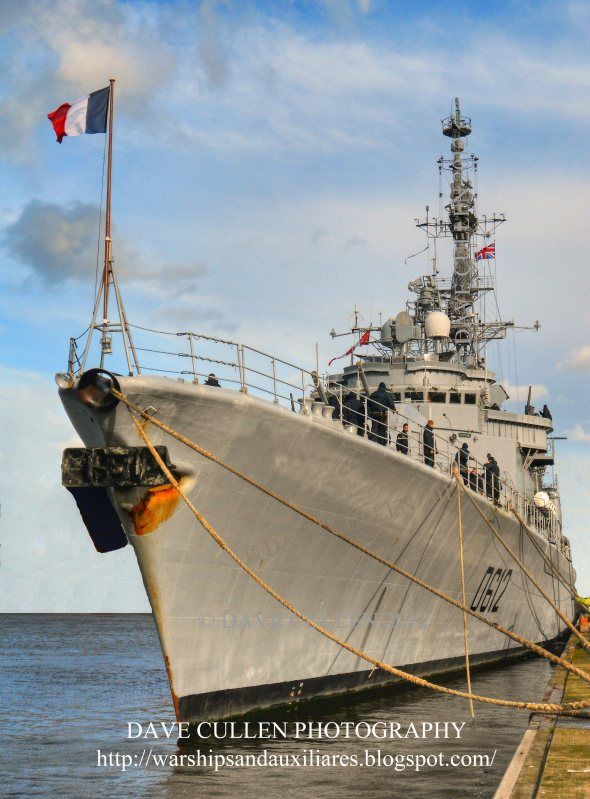
The De Grasse is a F67 type large high-sea frigate (warship) of the French Marine Nationale specialised in anti-submarine warfare, though she also has anti-air and anti-surface capabilities. She is named after the 18th Century admiral count François Joseph Paul de Grasse.

Between 1994 and 1996, the De Grasse and her sister Tourville were refitted with the modern SLAMS anti-submarine system, an active Very Low Frequencies sonar.

In April 2006, the De Grasse lost her towed sonar array during an exercise in heavy sea. The incident was reported by the Canard Enchaîné; an investigation was launched to ascertain responsibilities for the loss of the 3 million euro worth sonar array. Meanwhile, the spare sonar of the decommissioned Duguay-Trouin was fitted on the De Grasse.

The F67 type is a class of large high-sea (Blue water) Destroyers of the French Navy specialised in anti-submarine warfare. They have anti-air and anti-surface capabilities.
Between 1994 and 1996, the Tourville and the De Grasse were refitted with the modern SLASM anti-submarine system, an active Very Low Frequencies sonar

Design

The ships are an enlarged version of the F65 class frigate Aconit. They have two shaft steam turbine machinery and a double hangar for two Lynx helicopters. They were the first ships fitted with the marine version of the Crotale surface to air missile system. A Malafon anti submarine missile system was fitted when the ships were built but this was removed during refits in the late 1980s

Ships

The three ships of the class, D612 De Grasse, D611 Duguay-Trouin and the D610 Tourville, are named after famous French sailors.

The three ships of the class were all built by Arsenal de Lorient:
Pen No
Ship
In Service
Decommissioned
D610
Tourville
21/06/1974
16/06/2011
D611
Duguay-Trouin
17/09/1975
13/07/1999
D612
De Grasse
01/10/1977
13/05/1972
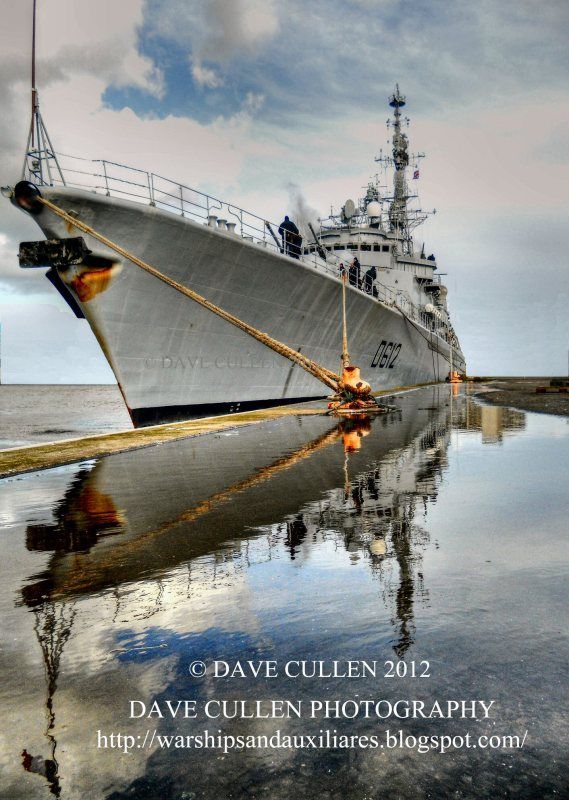
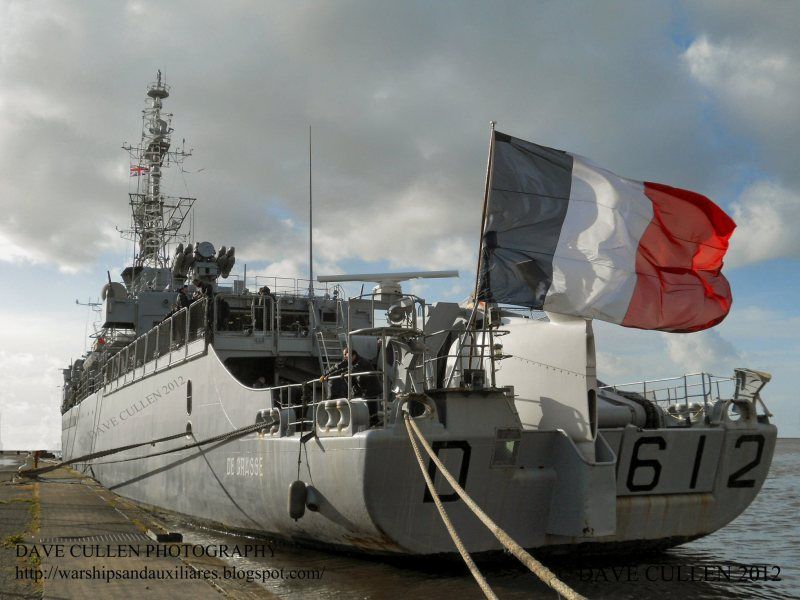
De Grasse is seen here arriving and alongside at Leith:


Monday, 7 May 2012

KNM UREDD


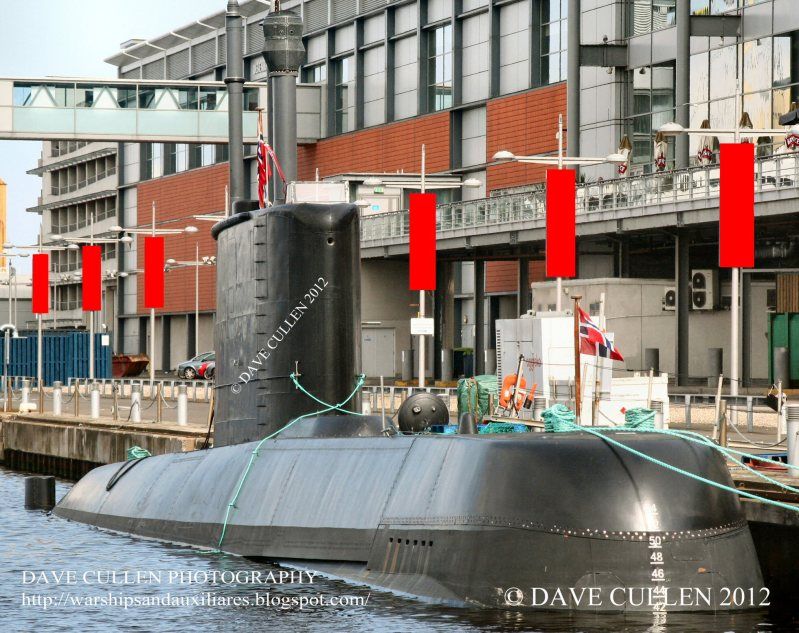
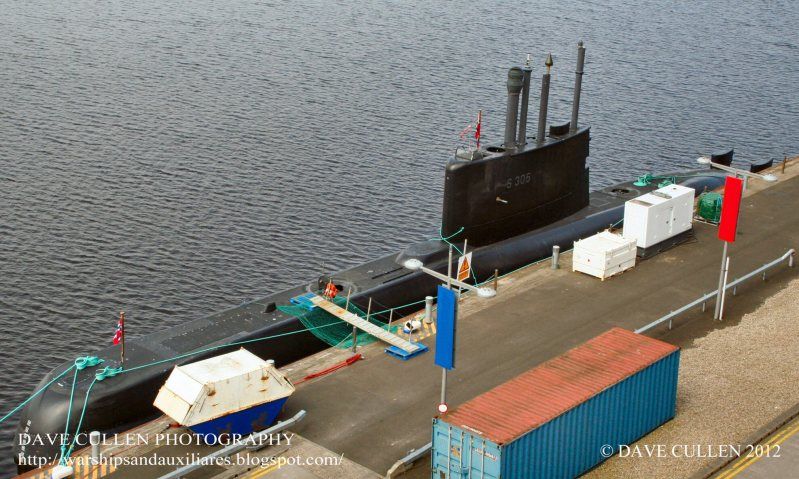
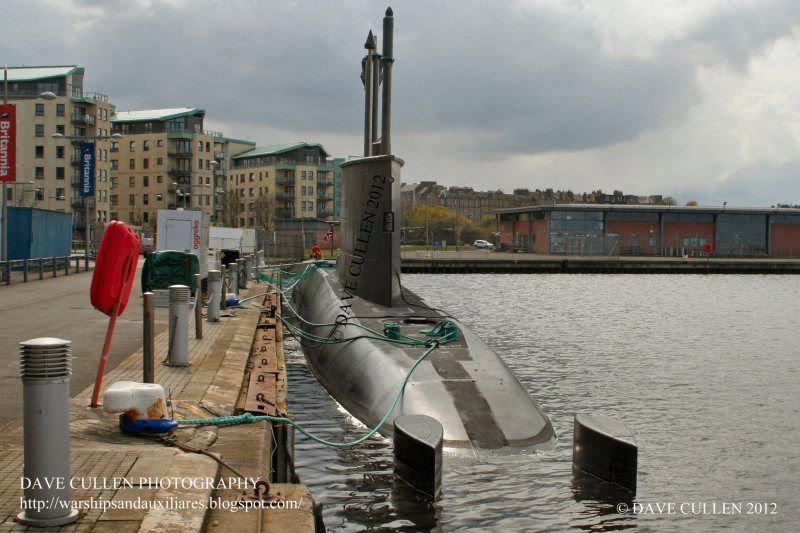
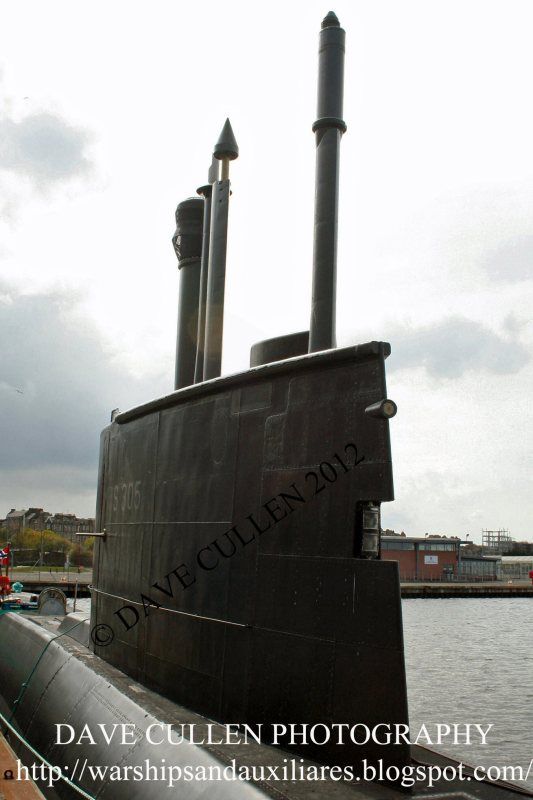
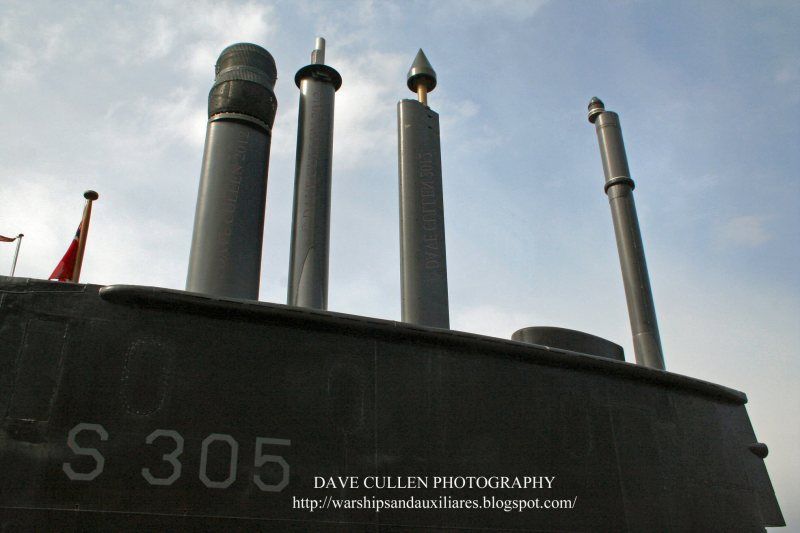
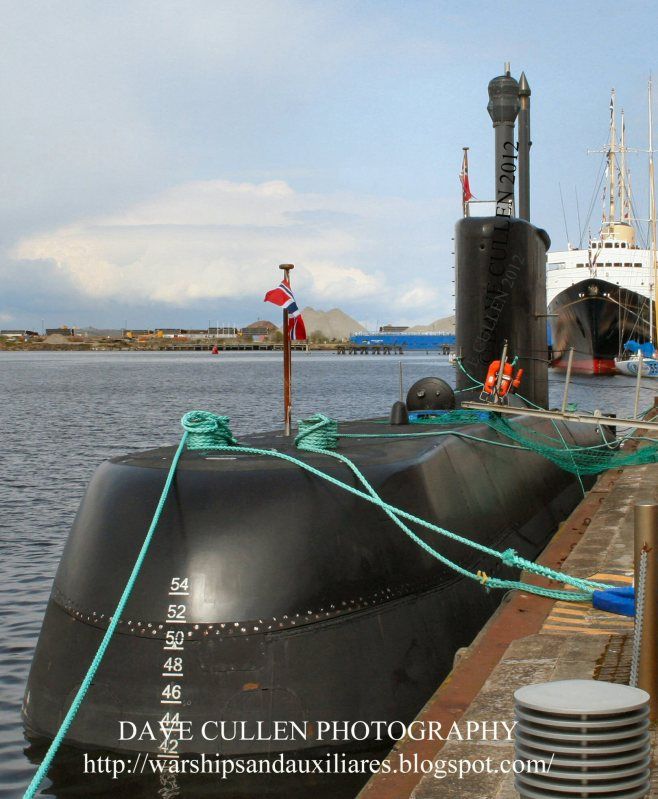
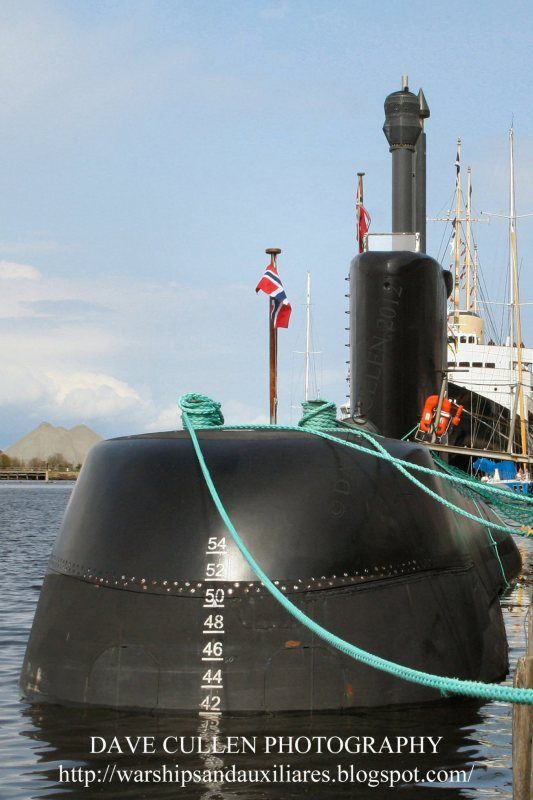
KNM Uredd is one of six ULA Class for the Norwegian Navy.

She is seen here alongside in Leith

For more info on the class click 

HEREHEREHEREHERE AND HERE 


HMS Queen Elizabeth Lower Block 03


Almost 2,000 tonnes of aircraft HMS Queen Elizabeth passed under the Forth Bridge on Friday, May 4.
  
On Friday May 4, the next large section of the aircraft carrier HMS Queen Elizabeth made its way under the Forth Bridge, en route to Babcock’s Rosyth Dockyard.

The 1,820 tonne Lower Block 05 (LB05) is the lower stern section of the first of two ships under construction by the Aircraft Carrier Alliance.

The block, which was constructed in two parts at BAE Systems’ Portsmouth shipyard, began its 600 mile journey to Fife on May 25 on board a specialist barge called Viking Seven.

Programme Director, Geoff Searle, said: “LB05 is the first section of HMS Queen Elizabeth to make its way from Portsmouth to Rosyth, where the aircraft carriers are being assembled. It’s another huge milestone for this programme and a real testament to the skills and hard work of the teams in Portsmouth where it has been under construction for the last 15 months.

“This section houses the rudder horns, which will hold the rudders in place, main electrical switchboards and hydraulic power packs for the steering system.”

When the section arrives at Rosyth, the ‘Goliath’ crane will lift both parts into the dockyard. They will be integrated with the rest of the ship later in the programme.

Although its weight is equivalent to more than 150 double-decker buses, LB05 is far from the largest section making its way up the Firth of Forth this year.

The aircraft carriers HMS Queen Elizabeth and HMS Prince of Wales are being delivered by the Aircraft Carrier Alliance, a unique partnering relationship between BAE Systems, Thales UK , Babcock  and the UK Ministry of Defence.

Click HERE  to see Lower Block 03 passing under both Forth Bridges
Lower Block 05 is seen here passing under both the Forth Bridges on her way to Rosyth.


Saturday, 28 April 2012

Ensdorf Class Minesweeper


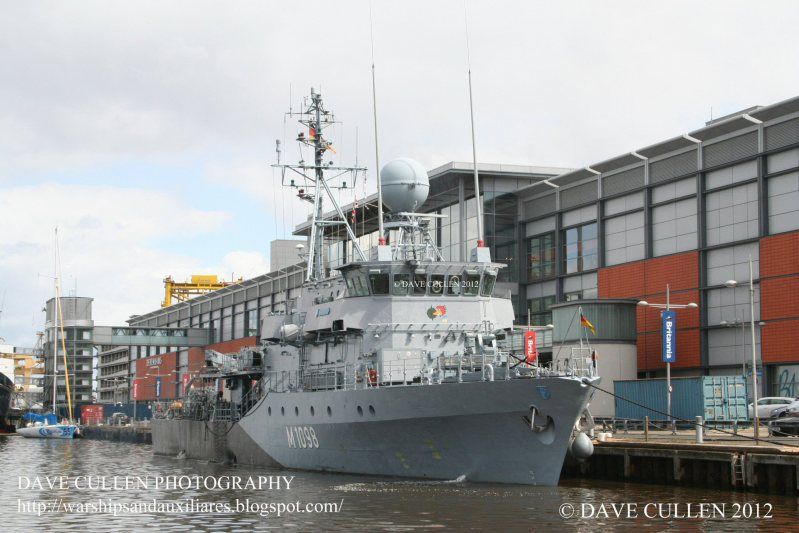
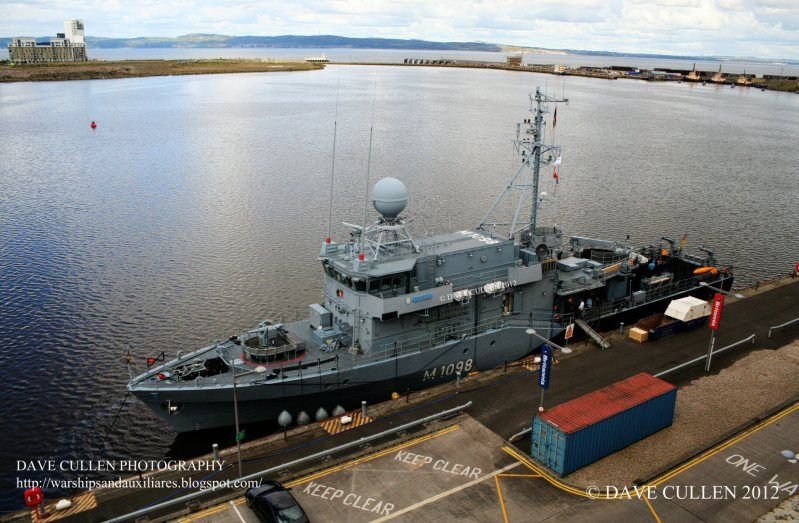
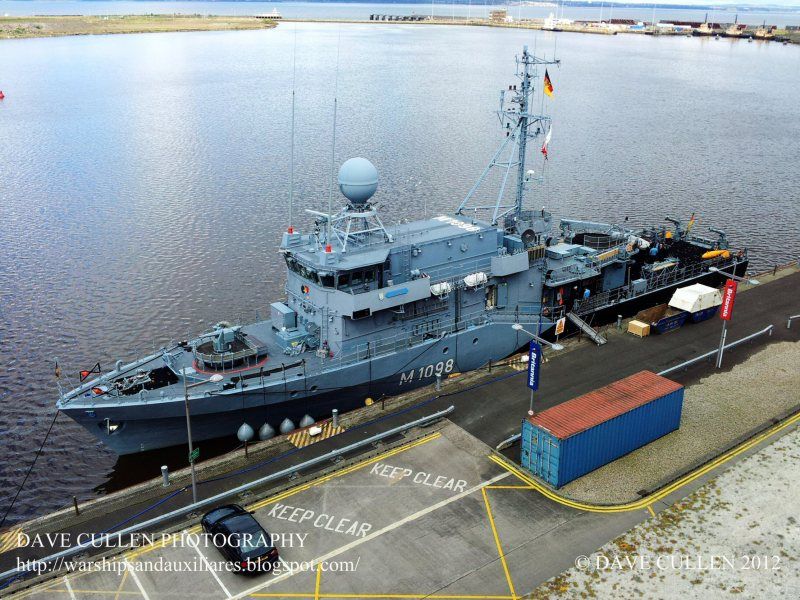
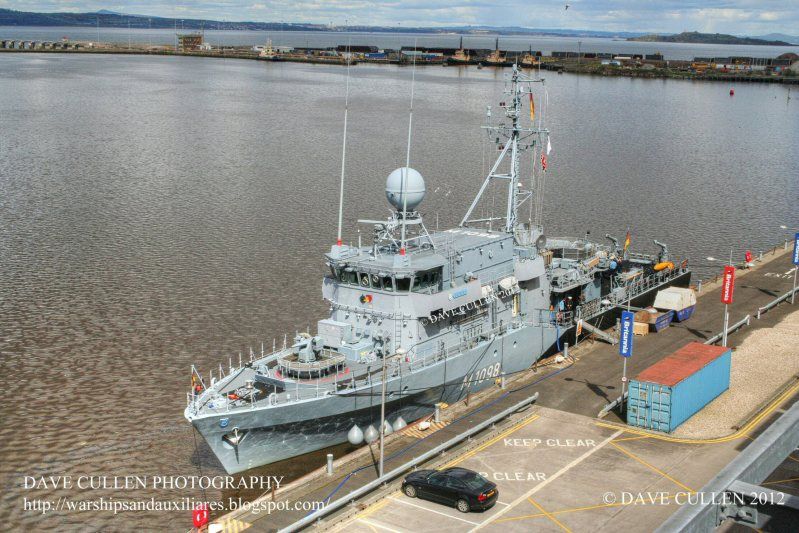
Fgs Siegburg is a Ensdorf class minesweeper class mine hunter 

The five minesweepers of the German Navy's Type 352 Ensdorf class are former Type 343 Hameln class minesweepers that have been upgraded with the TROIKA PLUS system.

The Ensdorf class have three modes to clear mine fields:
TROIKA PLUS: This system employs up to four remote controlled Seehund ("Seal") drones which perform the sweep. The drones are small unmanned boats that can simulate the acoustic and magnetic signatures of bigger ships to trigger mines. Their small size and special construction let them survive the effects of exploding mines unharmed.

Mine hunting: Mines detected with the hull-mounted sonar can be identified and exploded with expendable Seefuchs (SeaFox) ROVs.

Classical minesweeping: Against moored mines the classical minesweeping using towed wire cutters to cut the anchors of mines can be conducted.

The Ensdorf class replaced the Type 351 Lindau class minesweepers in service with the German Navy.
The ships were not decommissioned for their rebuilding to Type 352, so the listed dates are the ones of their commission as Type 343. Auerbach/Oberpfalz  (Auerbach/OPV) is one single name.
The ships currently belong to the 5. Minensuchgeschwader (5th Mine Sweeping Squadron) based in Kiel at the Baltic Sea.
She is seen here alongside in Leith 27th April 2012


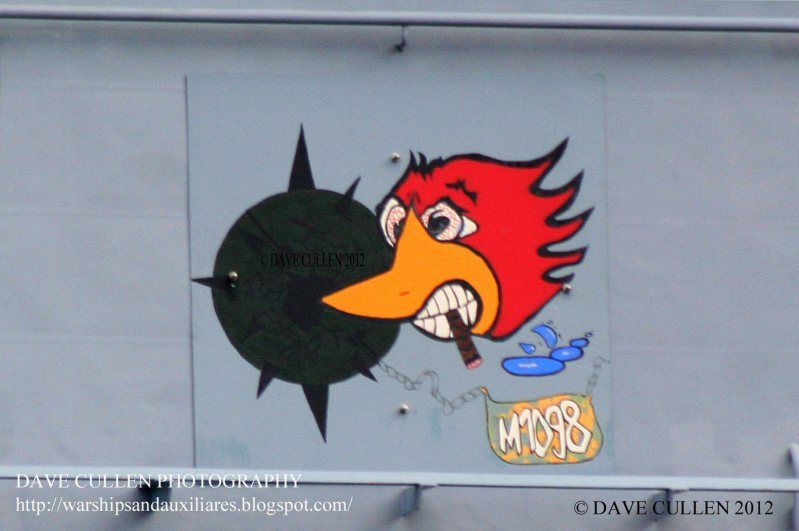
Ships unofficial mascot - it looks like a character from the Angry Bird game destroying a mine