Total Pageviews

Copyright Theft

Copyright

All photographs are copyrighted.

Please do not copy or re-use without my WRITTEN permission.

Images published without consent is not permitted. I will procceed with court action on Copyright theft.

Copies maybe obtained upon request.

warshipsandauxiliares@yahoo.co.uk

Thank you

Monday, 28 July 2014

HMS Illustrious


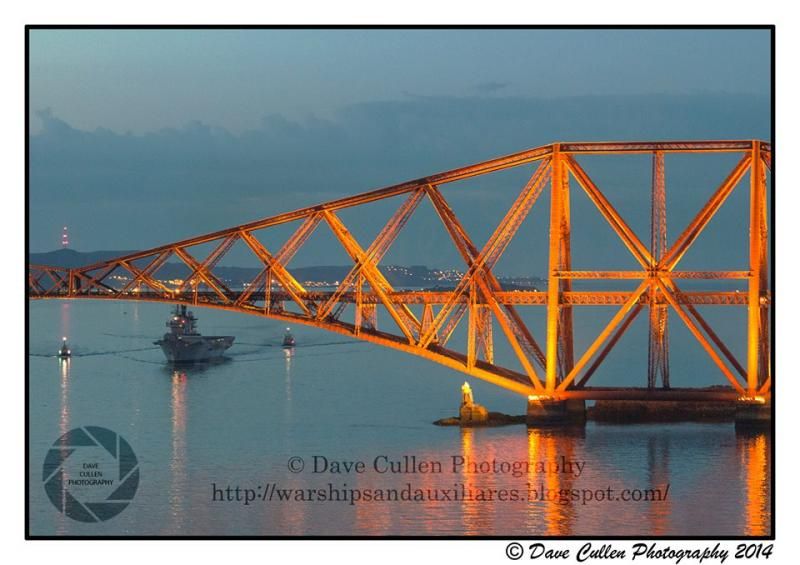
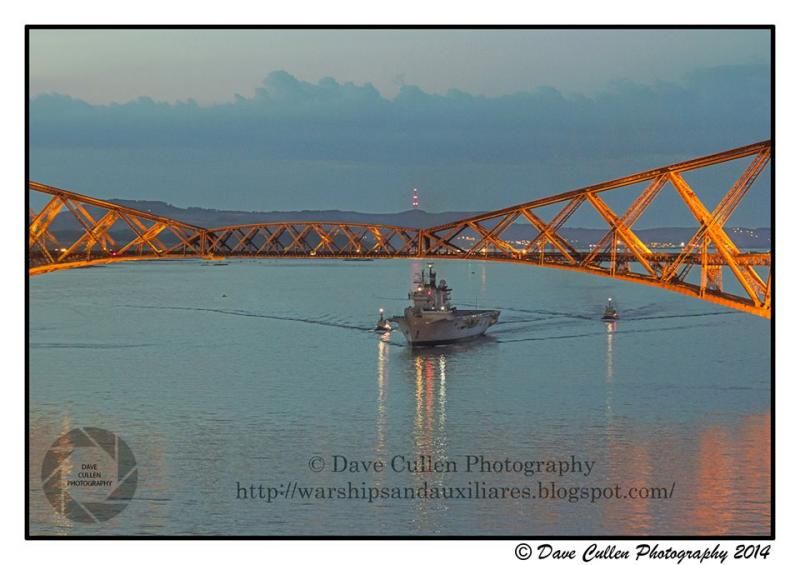
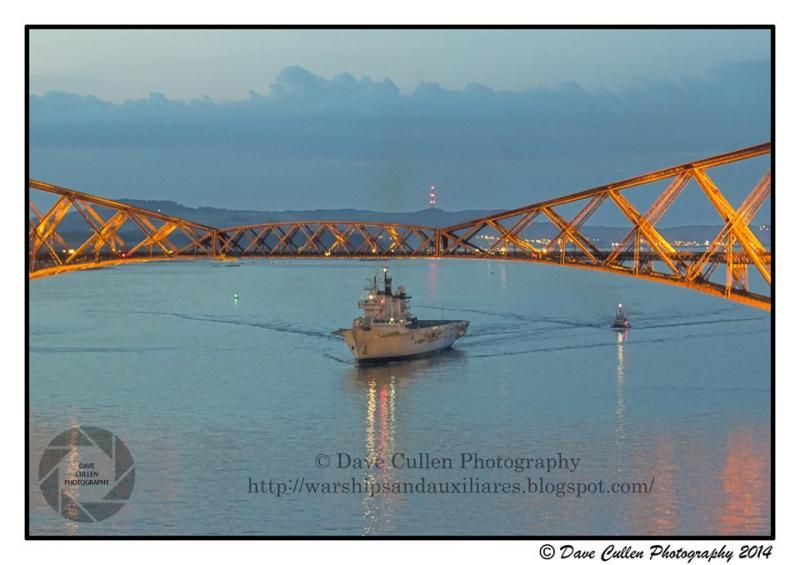
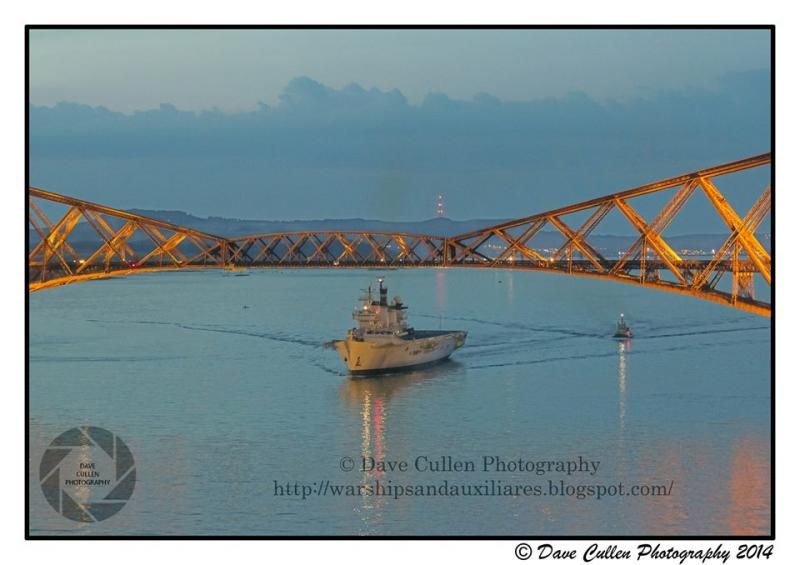
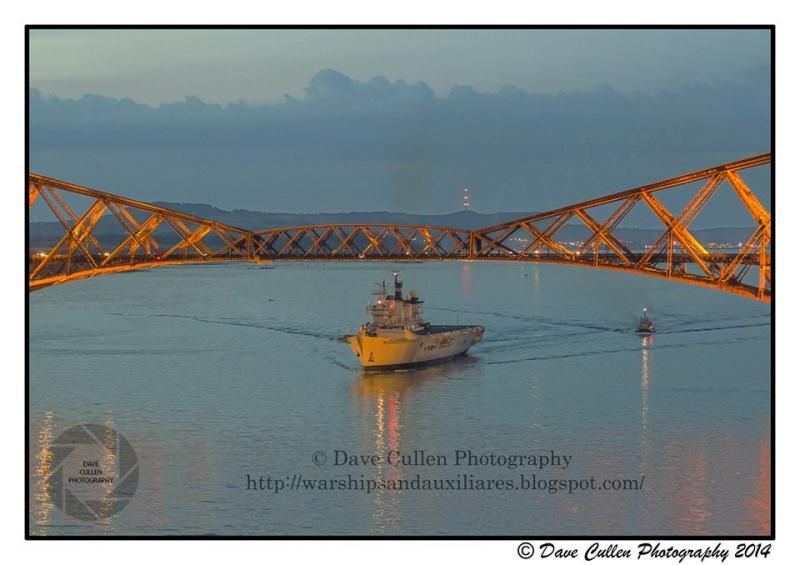
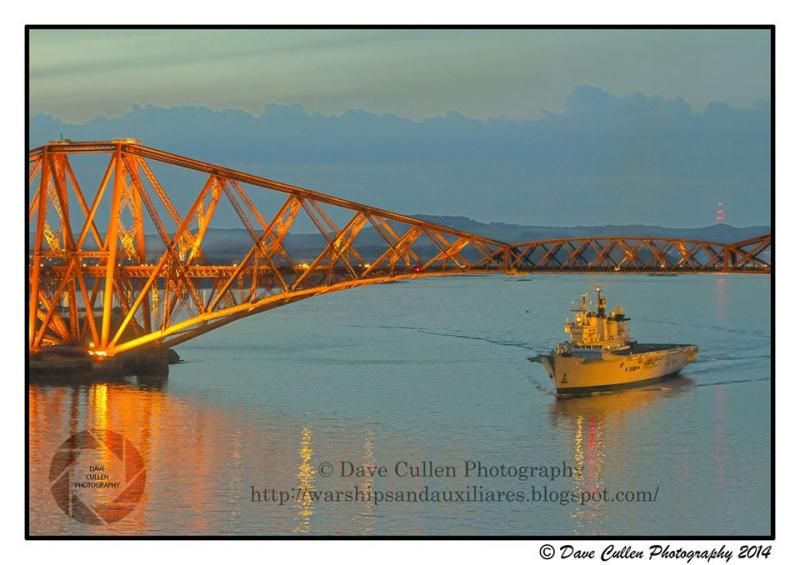
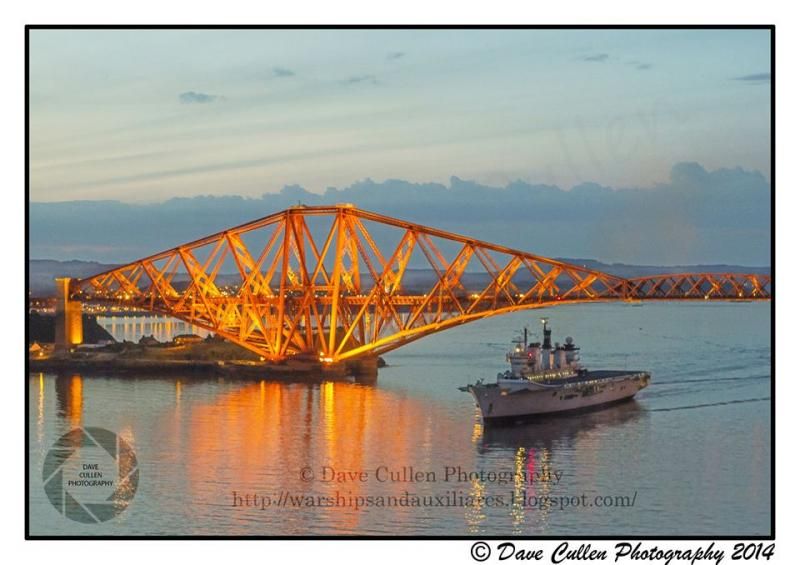
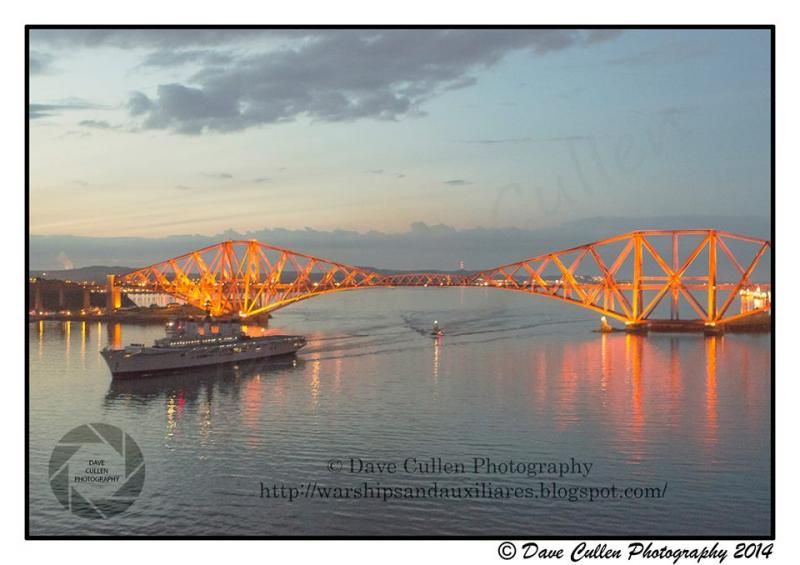
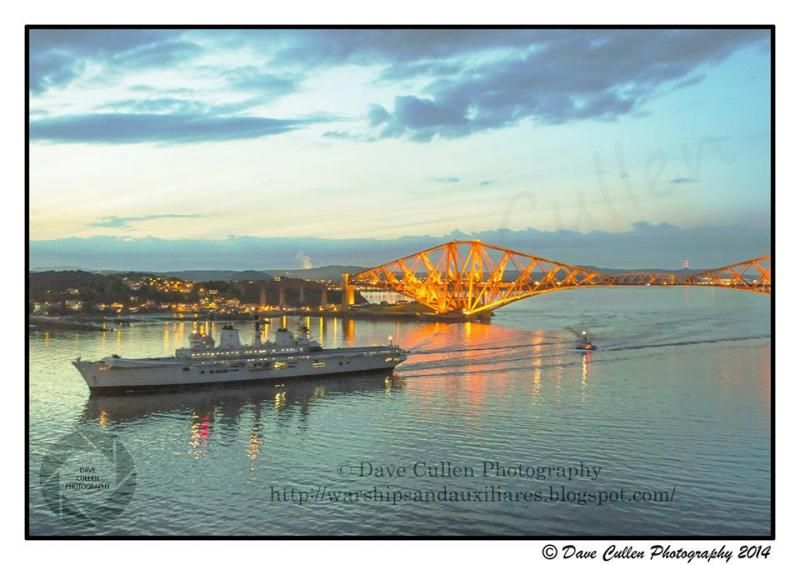
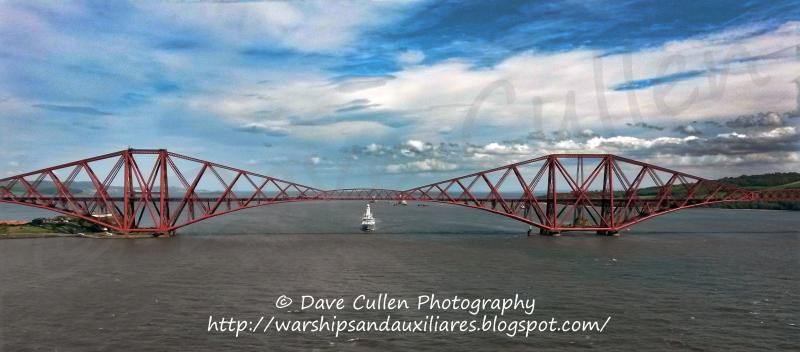
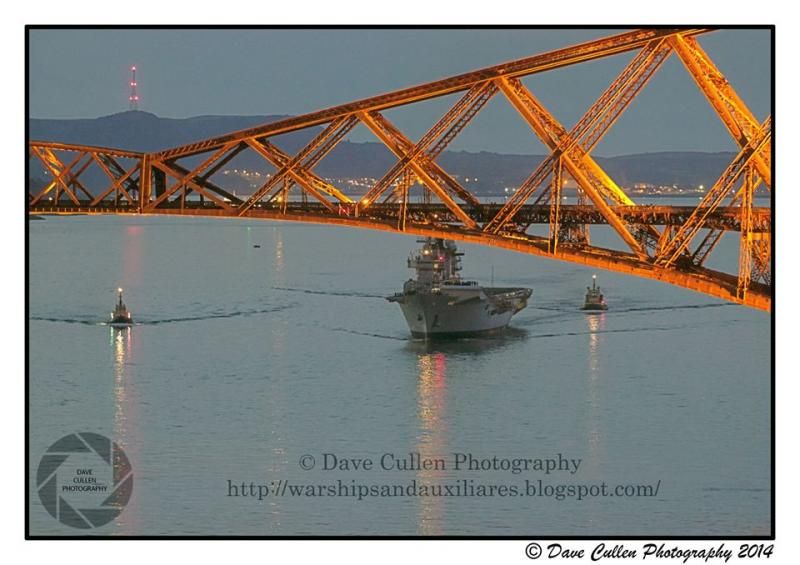
HMS Illustrious is seen here arriving under the world famous Forth (Rail) Bridge on Tuesday 1st July at around 23:30.  This was her final visit to The Firth of Forth before heading back to Portsmouth three weeks later to decommission.

Her visit was to tie in with the naming of the new aircraft carrier HMS Queen Elizabeth, “Lusty” entered in to the dock adjacent to the Queen Elizabeth for the naming ceremony.    

HRH Queen Elizabeth named the carrier on Friday 4th July 2014 with a flyover from both the Red Arrows and a mixture of modern helicopters including a Merlin, Chinook, Lynx and the Wildcat.  

Hms Illustrious sailed under The Forth Road Bridge on Thursday 17th July just before midnight for the very last time before retiring, her future remains unclear.


Wednesday, 4 June 2014

HMS Duncan


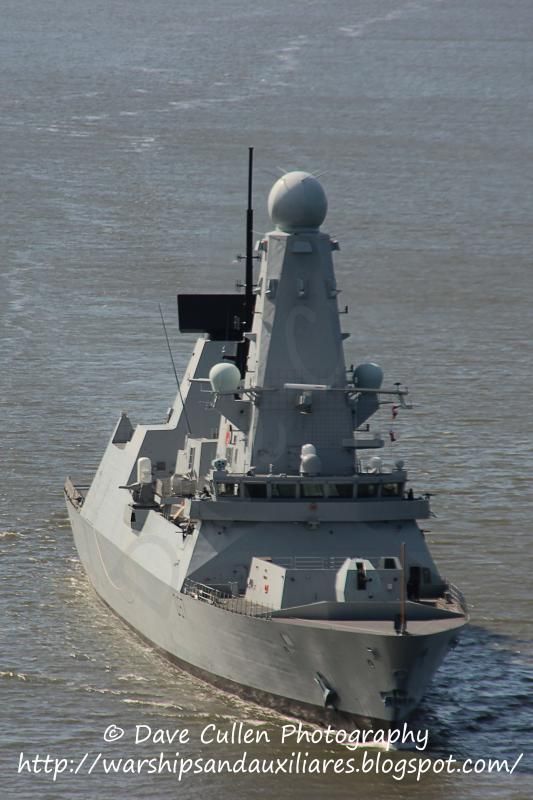
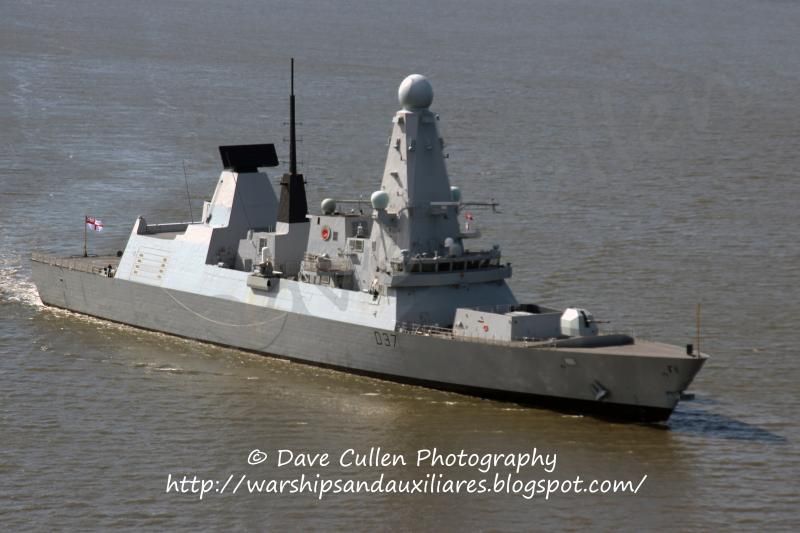
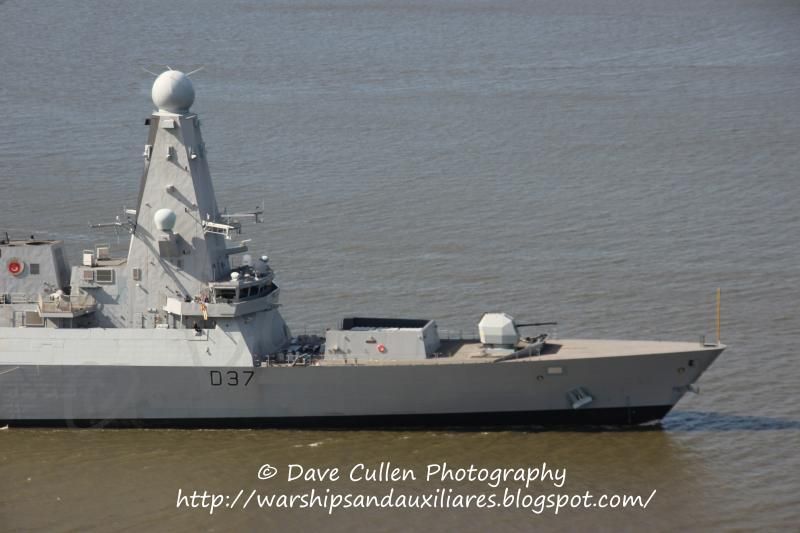
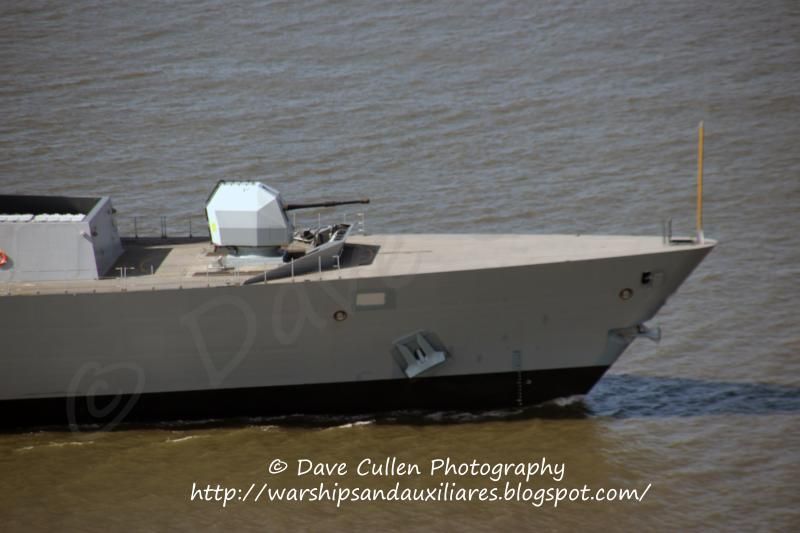
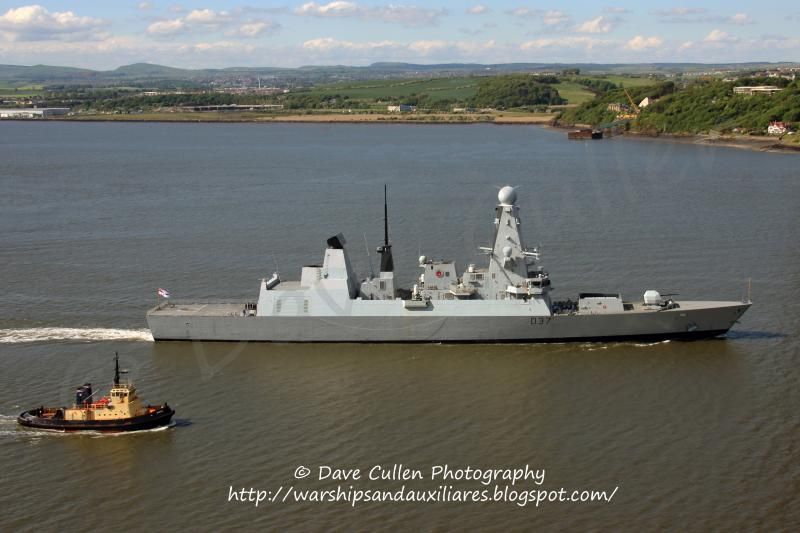
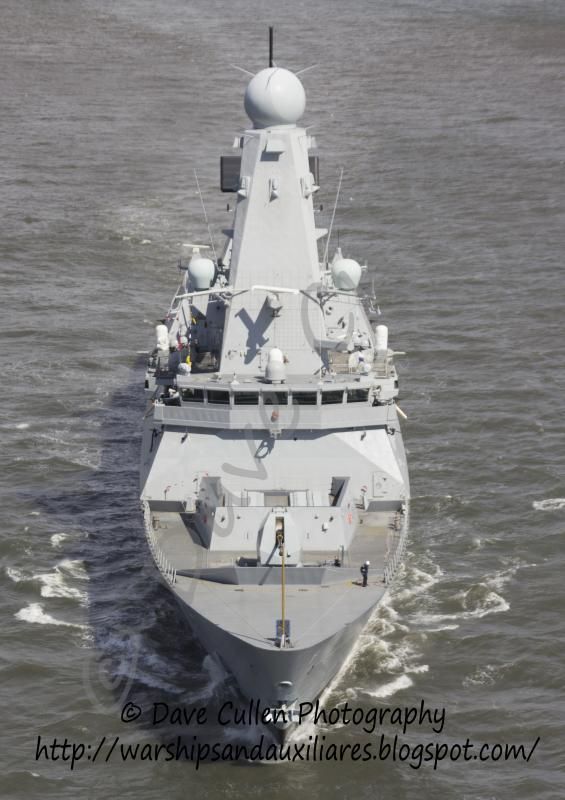
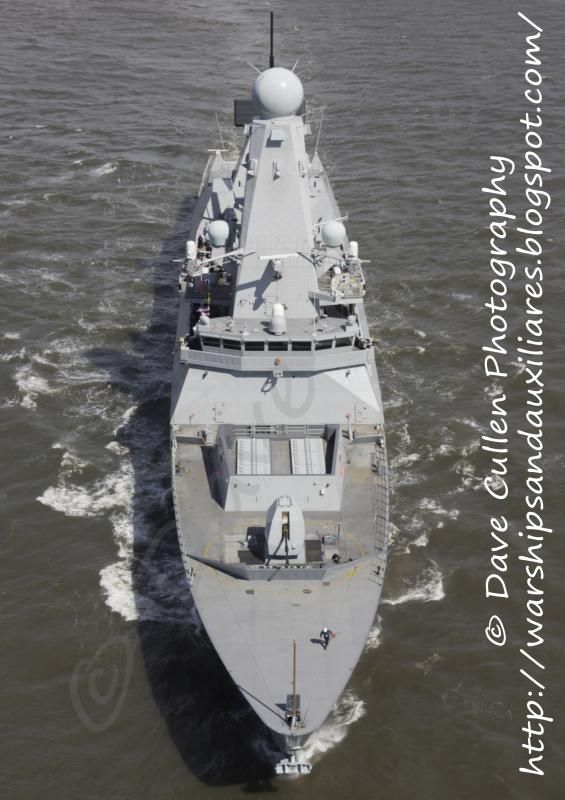
Hms Duncan (D37) is the Royal Navy’s newest and most advanced warship.  She was launched into the River Clyde on the 11th October 2010 and entered service with the Royal Navy on the 30th December 2013.

She is the sixth and final type 45 destroyer.  She displaces some 8,000 tons, and her speed is in excess of 30 knots (33 mph) she can travel  over 7,000 nautical miles  at a steady 18 knots ( 33 kmh)

She has a full complement of 190 men and women.

She is seen here departing The Firth of Forth on Wednesday 21st May 2014 having stored up her Sea Viper missiles from Crombie Pier a few miles up the river.


Sunday, 18 May 2014

HMS Duncan


The Type 45 destroyer, also known as the D or Daring-class, is a class of guided missile destroyers built for the United Kingdom's Royal Navy. The class is primarily designed for anti-aircraft and anti-missile warfare and is built around the PAAMS (Sea Viper) air-defence system utilizing the SAMPSON AESA and the S1850M long-range radars. The first three destroyers were assembled by BAE Systems Surface Fleet Solutions from partially prefabricated "blocks" built at different shipyards, the remaining three were built by BAE Systems Surface Ships. The first ship in the Daring class, HMS Daring, was launched on 1 February 2006 and commissioned on 23 July 2009.

The Type 45 destroyers were built to replace the Type 42 destroyers that had served during the Falklands War, with the last Type 42 being decommissioned in 2013. The National Audit Office reported that, during an "intensive attack", a single Type 45 could simultaneously track, engage and destroy more targets than five Type 42 destroyers operating together.  

After the launch of Daring on 1 February 2006 Admiral Sir Alan West, a former First Sea Lord, stated that it would be the Royal Navy's most capable destroyer ever, as well as the world's best air-defence ship.  The reduction in the number to be procured from twelve eventually down to six (in 2008) was controversial.

HMS Duncan is the sixth and last of the Type 45 or Daring-class air-defence destroyers built for the Royal Navy. Duncan is named after Adam Duncan, Viscount Duncan of Camperdown (1 July 1731 – 4 August 1804), who defeated the Dutch fleet at the Battle of Camperdown on 11 October 1797.

Duncan's construction began at the BAE Systems Naval Ships (now part of BAE Systems Surface Ships) yards at Govan and Scotstoun on the River Clyde in 2006. She was launched from Govan on 11 October 2010,on the 213th anniversary of the Battle of Camperdown).  She entered service on 30 December 2013, 4 months ahead of schedule, 
after a period of trials and training.

She is 152 meters long (498 feet), has a crew of 180 (ands 60 troops when required), she will be in service until at least 2040.

She is the last in the class of the type 45 destroyer, her sisters are: Daring, Dauntless, Diamond, Dragon, Defender.

On 9 March 2007, The Independent reported that Saudi Arabia was considering buying "two or three" Type 45s.  On 7 September 2007 it was reported that Saudi Arabian officials had been invited to observe Daring's sea trials.

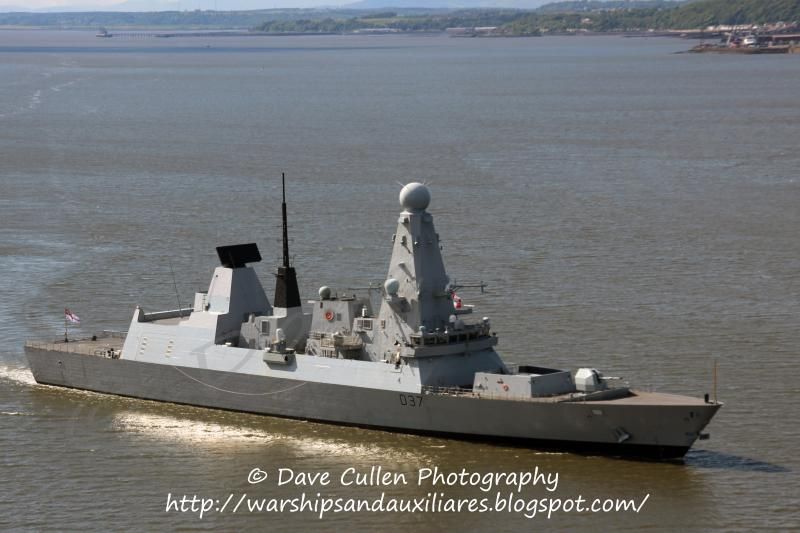
Hms Duncan is seen here making her debut in The Firth of Forth on Friday 16th May 2014


Saturday, 12 April 2014
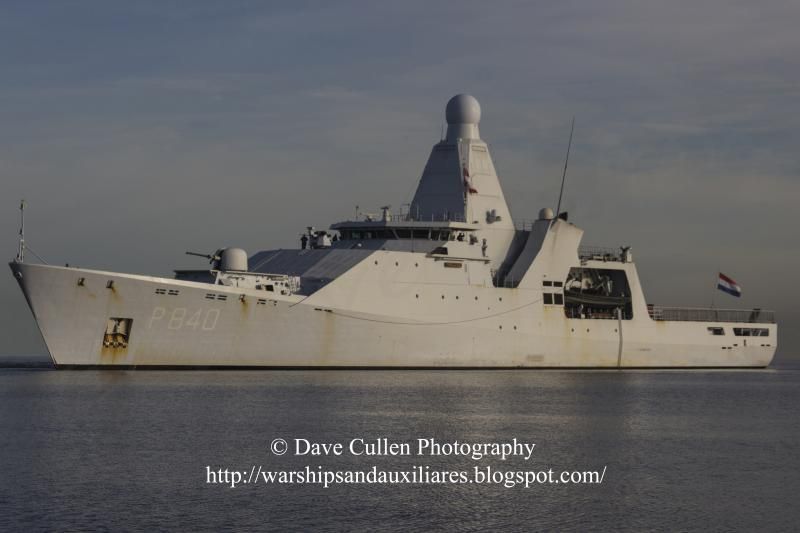
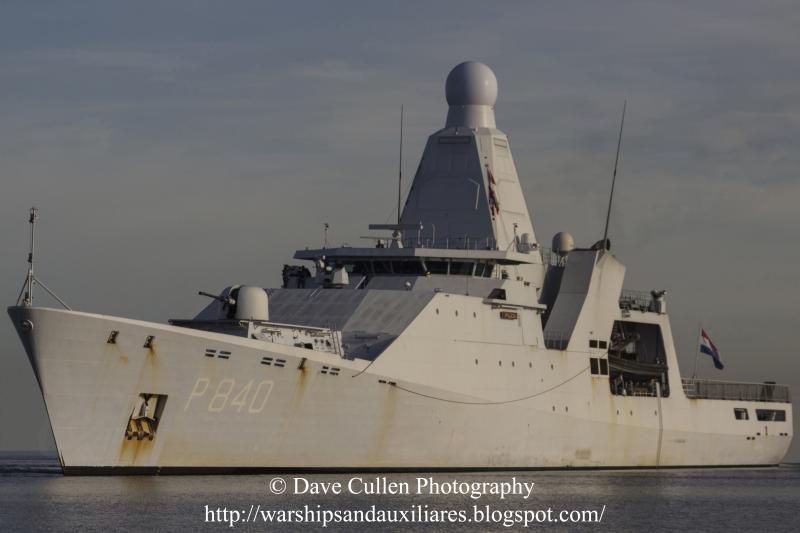
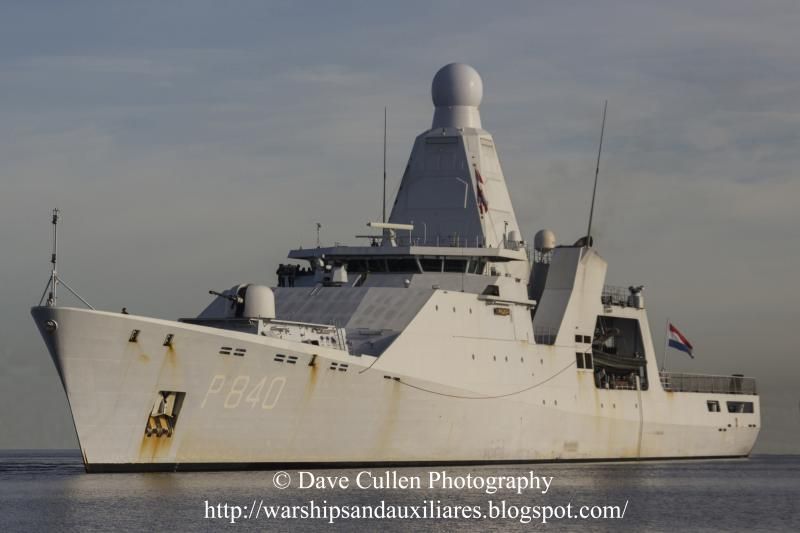
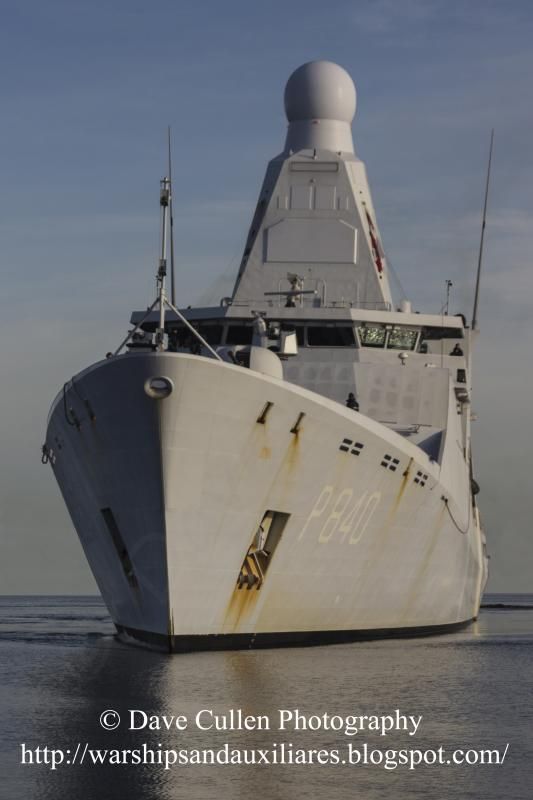
Holland-Class Offshore Patrol Vessels


Holland-class offshore patrol vessels
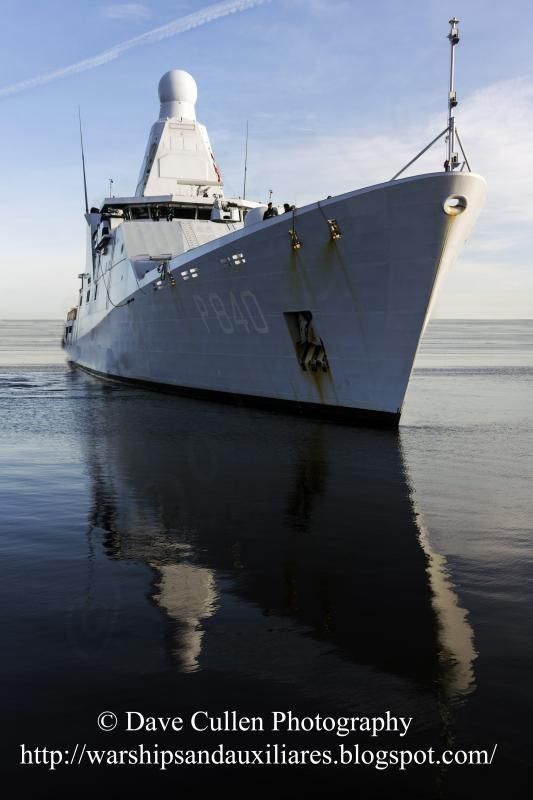
The Holland-class offshore patrol vessels are new offshore patrol vessels for the Royal Netherlands Navy. They are designed to fulfill patrol and intervention tasks against lightly armed opponents, such as pirates and smugglers.

The vessels are planned to be deployed to the Caribbean region, the South China Sea and the North Sea.  They have the capability to carry out missions such as anti-piracy and blockade duties, and also can be used for emergency transport.

The Holland class' main armament is a 76mm Oto Melara Super Rapid gun with a firing rate of 120 rounds per minute and an effective range of 16 km.  Secondary armament is provided by a 30mm Oto Melara Marlin WS rapid cannon, two 12.7mm Oto Melara Hitrole NT's and two 12.7mm M2HB machine guns.  All can be remotely operated. 

Holland-class ships have a tonnage of 3,750 tons, are 108.4 metres (356 ft) in length, 16 metres (52 ft) in beam and have a draft of 4.55 metres (14.9 ft).  The ships have a speed of 21.5 knots and a range of 5000 nautical miles at 15 knots.  The ship's complement is 50 crew, as well as up to 40 people for duties such as helicopter or medical crew. 

The ships are built to a design that is intended to reduce the ability of radar to detect them, as well improving seakeeping by locating the superstructure unusually far aft.  The ships are painted a new light blue-gray color, which supposedly has a better camouflage-effect than the standard light-grey paint used by other RNLN-ships. The ships have a hangar and flightdeck for an NH-90 helicopter and also carry two Fast Raiding Interception Special forces Craft (FRISC), with a speed of more than 40 knots. 

The projected number of ships for the class is four; they are planned to be commissioned between 2011 and 2013. On December 20, 2007 the contract was signed for four ships at a cost of around €467.8 million.  The ships will be named after Dutch provinces of historical maritime importance. 

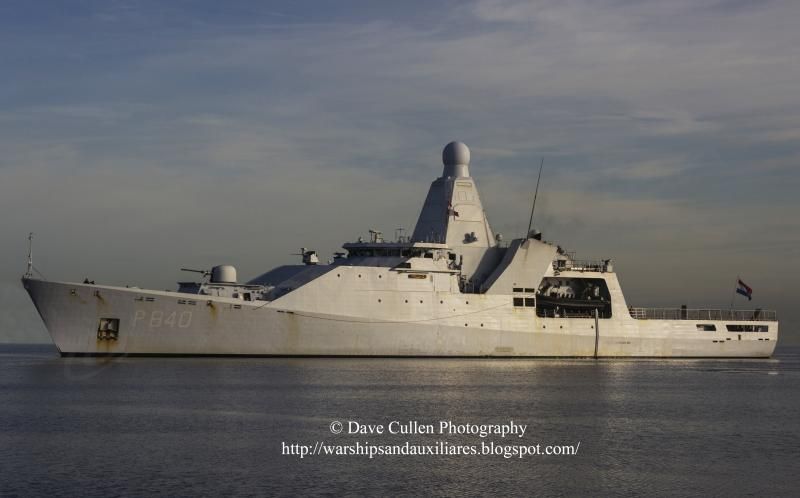
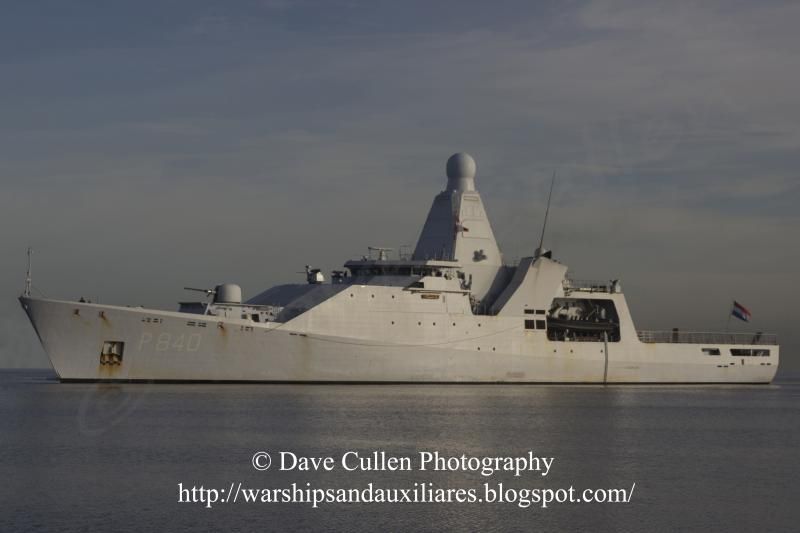
This is Holland’s debut to Edinburgh,  her sister Friesland made her debut to Leith a couple of years ago when she didn’t have her main mast. 

Ships of the class:
Holland (P840) entered service on the 6th July 2012
Zeeland (P841) entered service on the 23rd August 2013
Friesland (P842) began sea trials on 27th September 2011
Groningen (P843) began sea trials on 21st April 2011

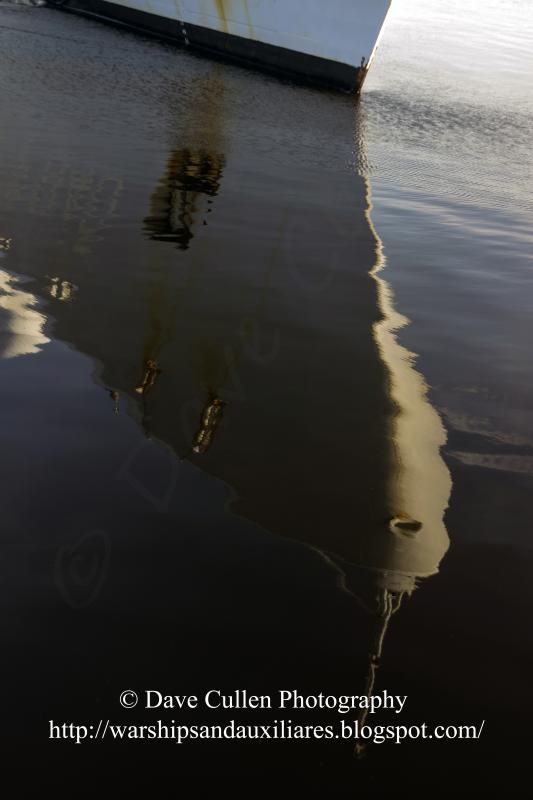
Holland is seen below arriving at Leith on Friday 11th April 2014.  


Saturday, 5 April 2014
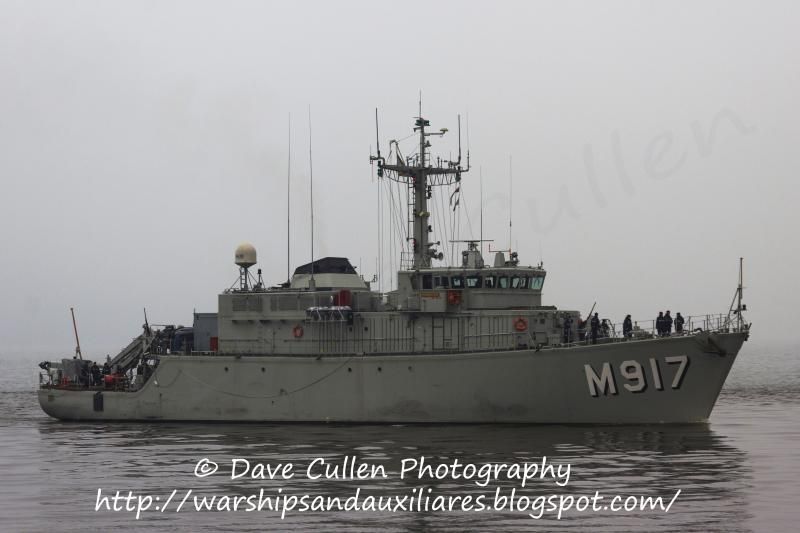
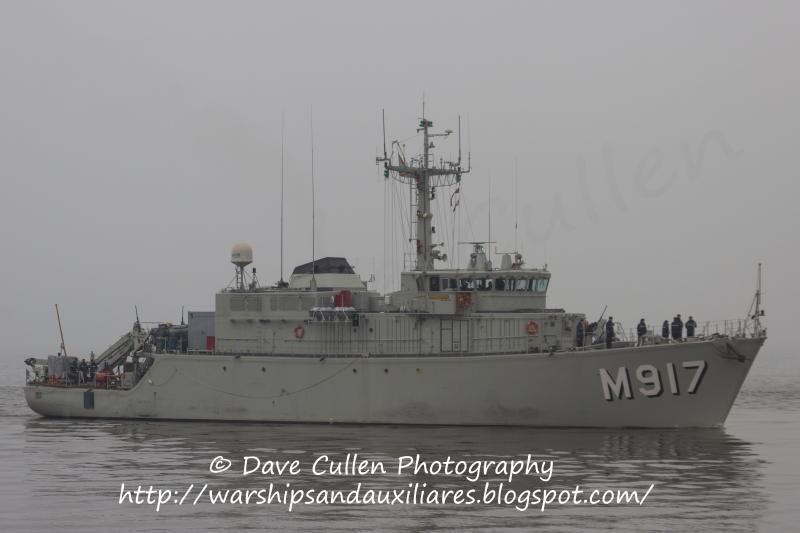
Bns Crocus


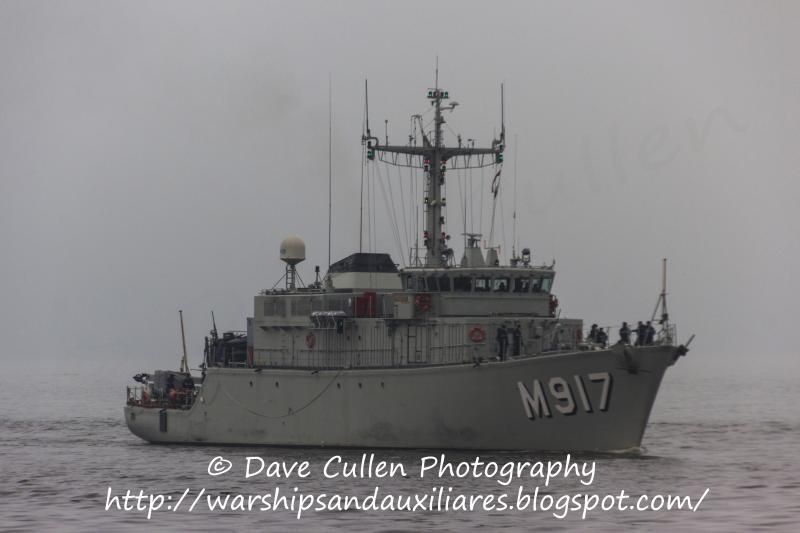
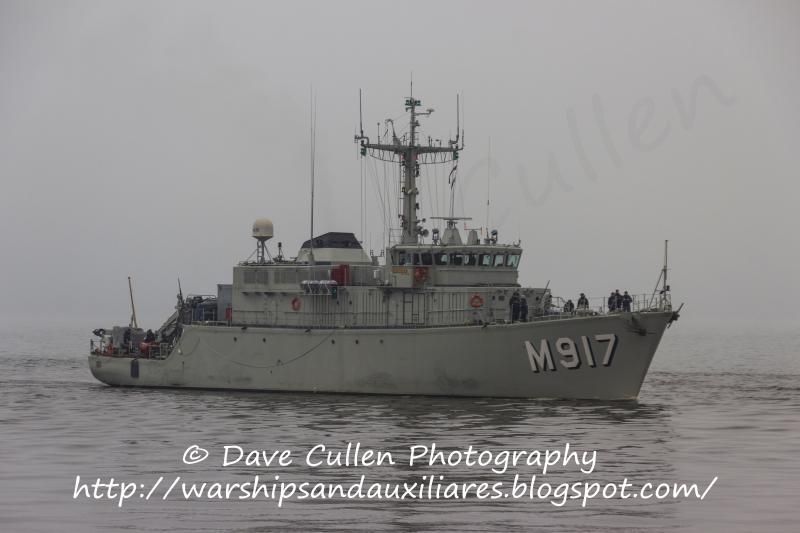
Belgian minehunter Crocus (M917) 
Crocus (M917) is a Tripartite class minehunter of the Belgian Naval Component, launched on September 3, 1986 at the Mercantile-Belyard shipyard in Rupelmonde and christened by Mrs. Gaethofs-Schreurs, the wife of the then Mayor of Genk, on September 18, 1986. 

The patronage of the Crocus was accepted by the city of Genk. She is the third of the Belgian Tripartite class minehunters.

She is currently commanded by Lieutenant Commander Kurt De Winter.  

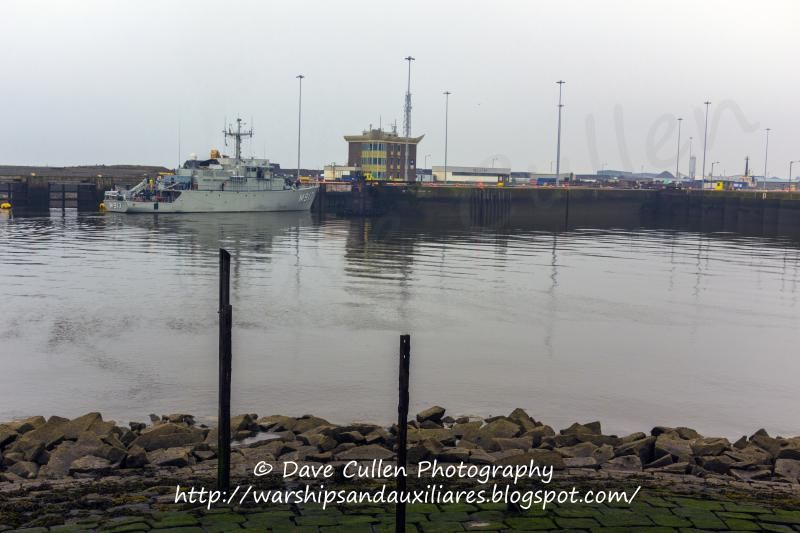
She is seen here arriving in Leith in abysmal weather on Friday 4th April 2014. 


Sunday, 30 March 2014
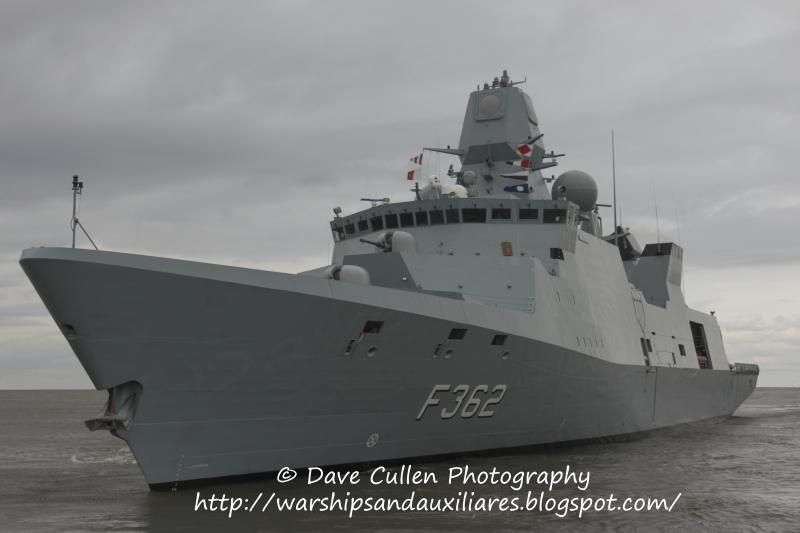
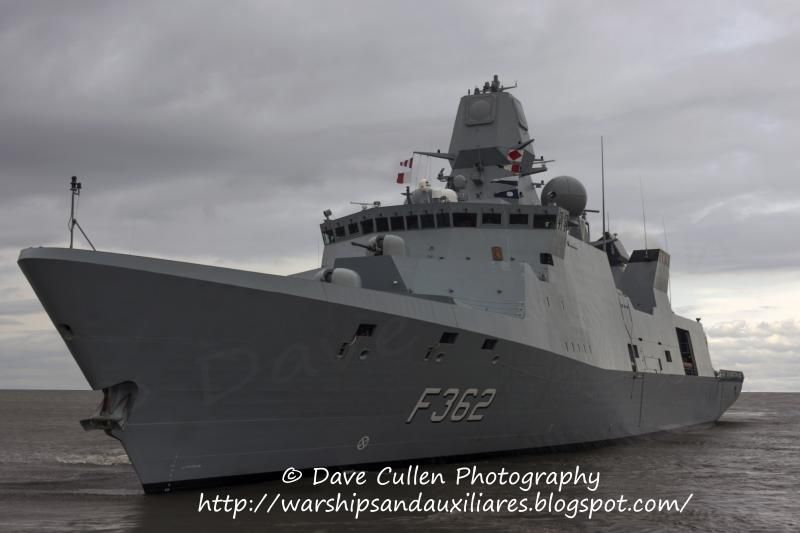
Joint Warrior 14-1 Hdms Peter Willemoes


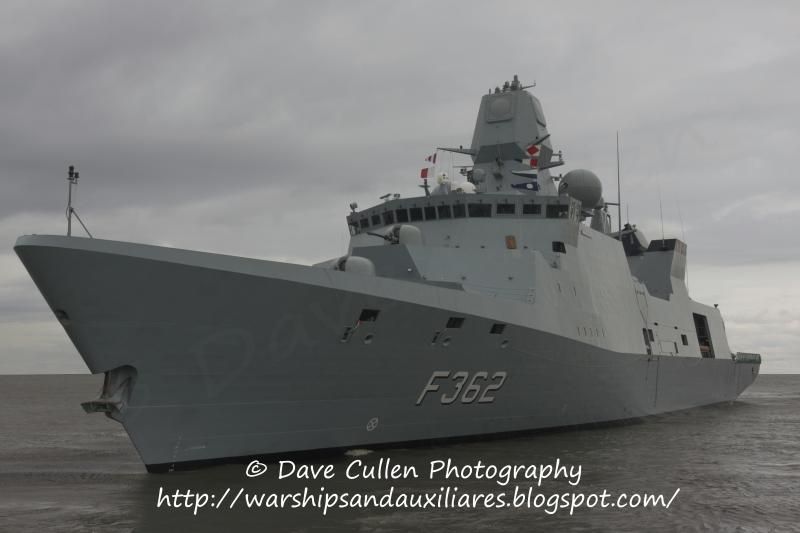
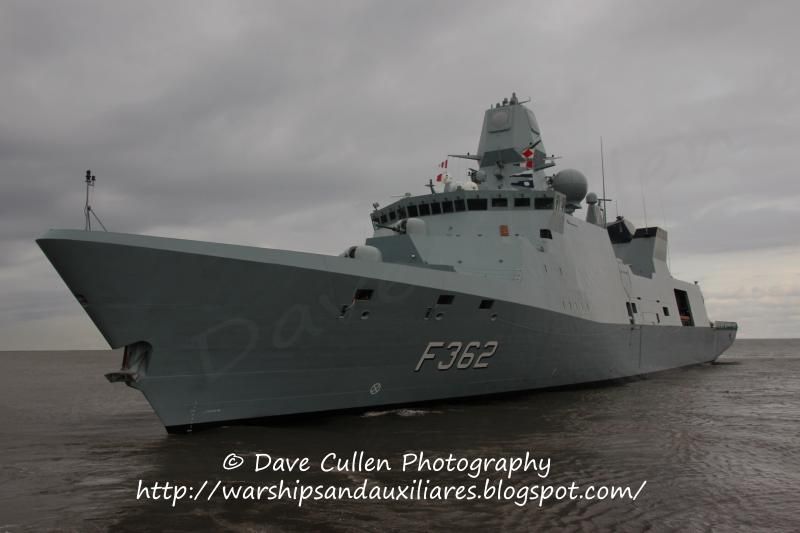
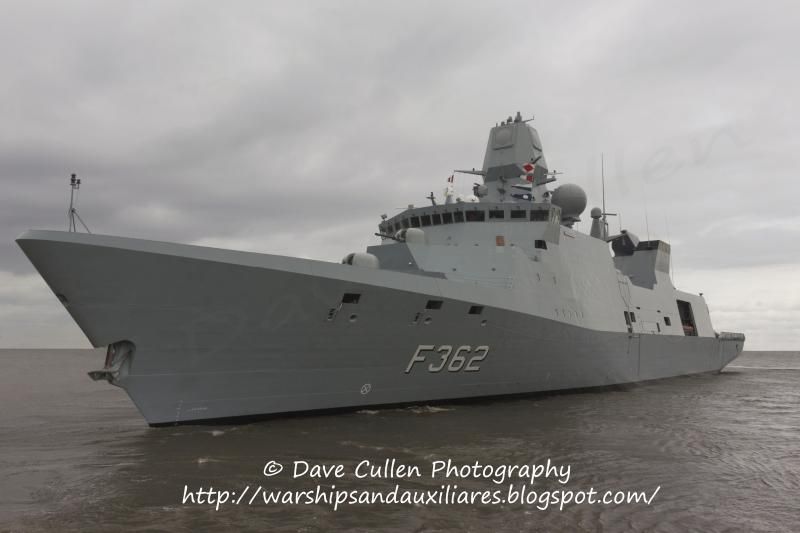
Iver Huitfeldt-class frigate

The Iver Huitfeldt class is a three-ship class of frigates that entered service with the Royal Danish Navy in 2012 and 2013.

The class is built on the experience gained from the Absalon-class support ships, and by reusing the basic hull design of the Absalon class the Royal Danish Navy have been able to construct the Iver Huitfeldt class considerably cheaper than comparable ships. The frigates are compatible with the Danish Navy's StanFlex modular mission payload system used in the Absalons, and are designed with slots for six modules. Each of the four stanflex positions on the missile deck is able to accommodate either the Mark 141 8-cell Harpoon launcher module, or the 12-cell Mark 56 ESSM VLS.

While the Absalon-class ships are primarily designed for command and support roles, with a large ro-ro deck, the three new Iver Huitfeldt-class frigates will be equipped for an air defence role with Standard Missiles, and the potential to use Tomahawk cruise missiles, a first for the Danish Navy.
Anti-air warfare

F361 Hdms Iver Huitfeldt
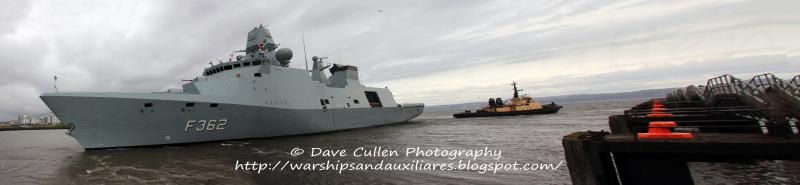
F362 Hdms Peter Willemoes
F363 Hdms Niels Juel

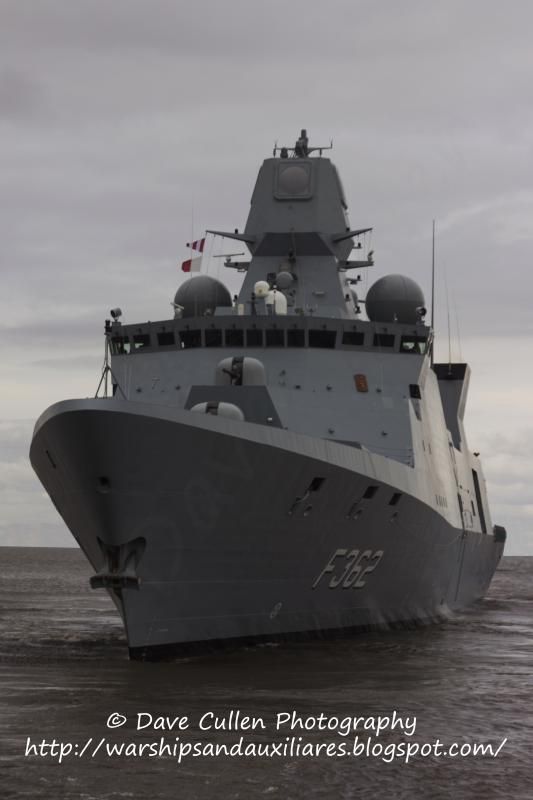
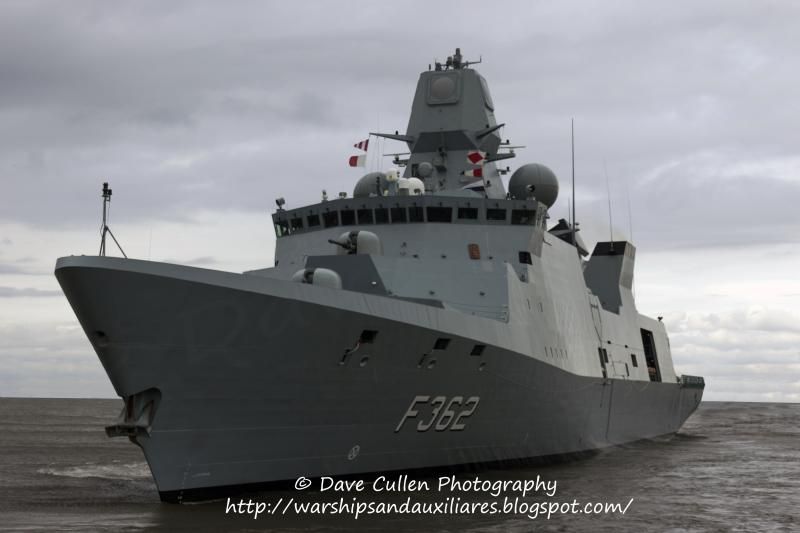
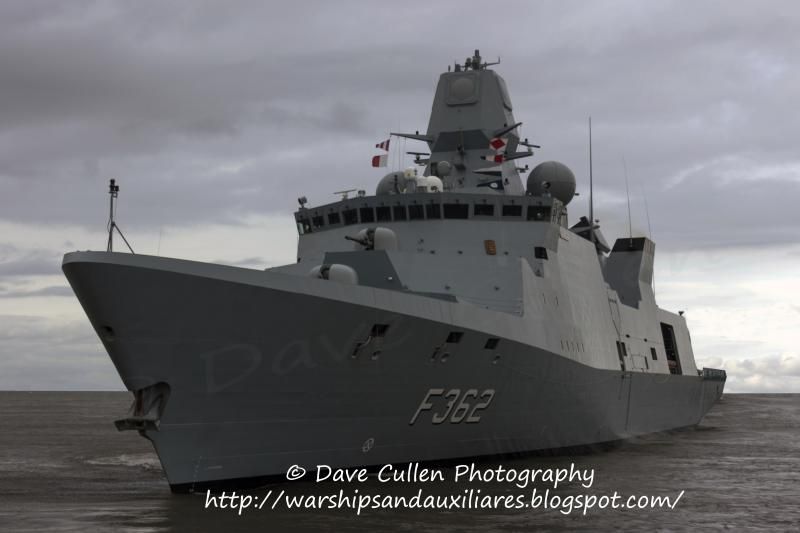
Hdms Peter Willemoes is seen making her debut to Leith on 28th March 2014


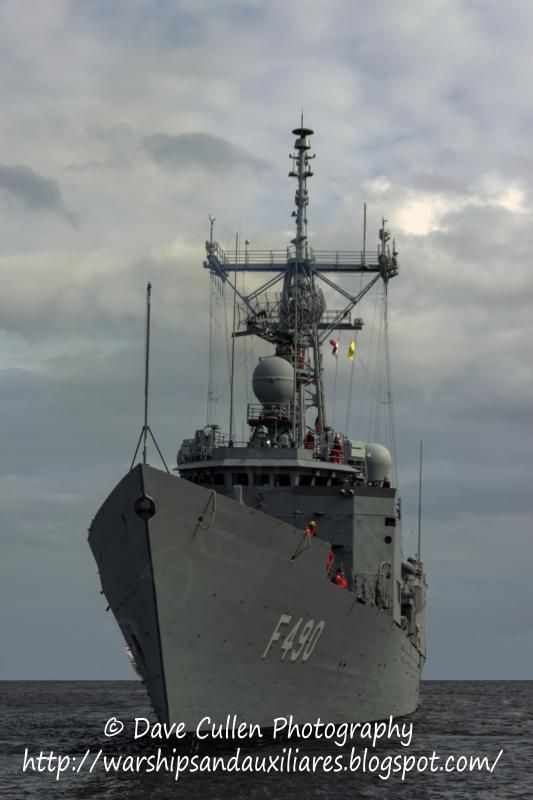
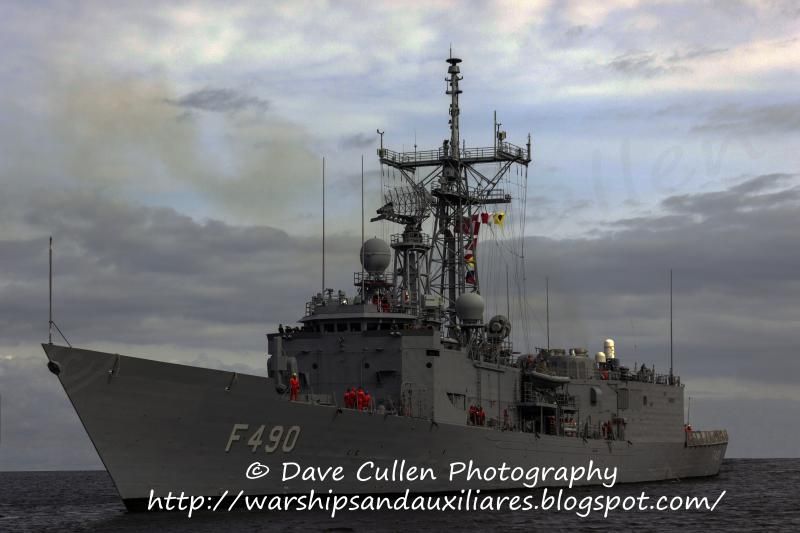
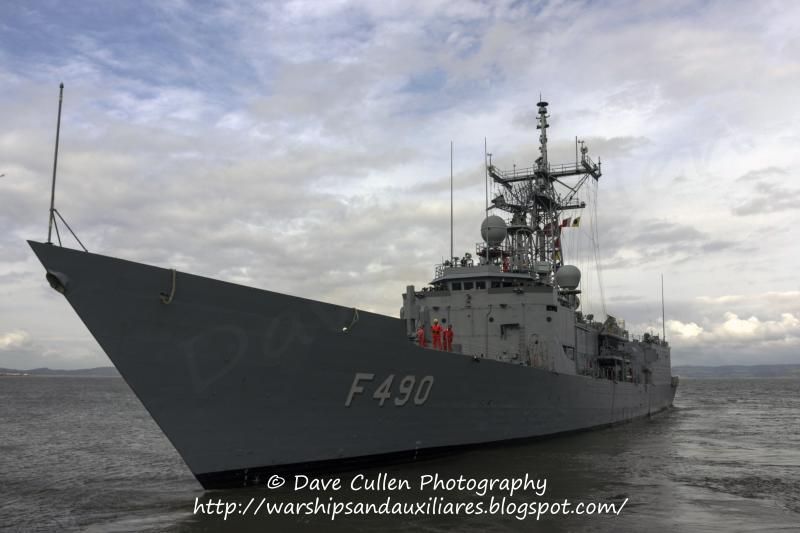
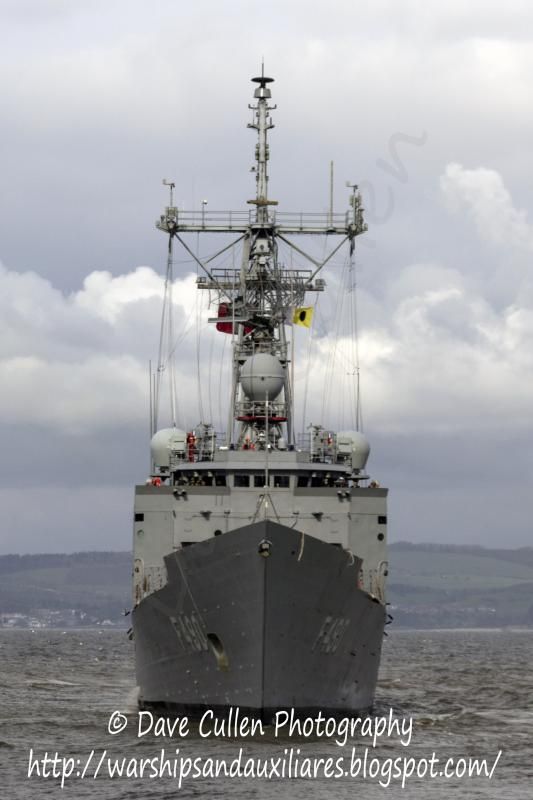
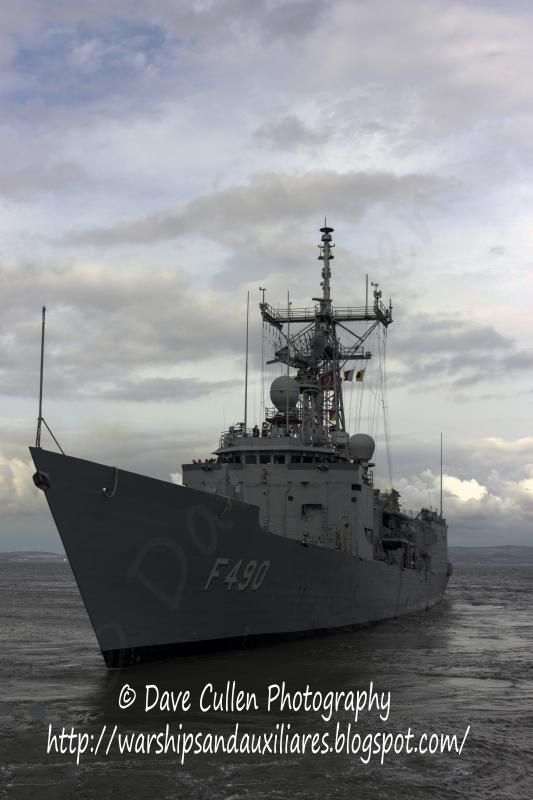
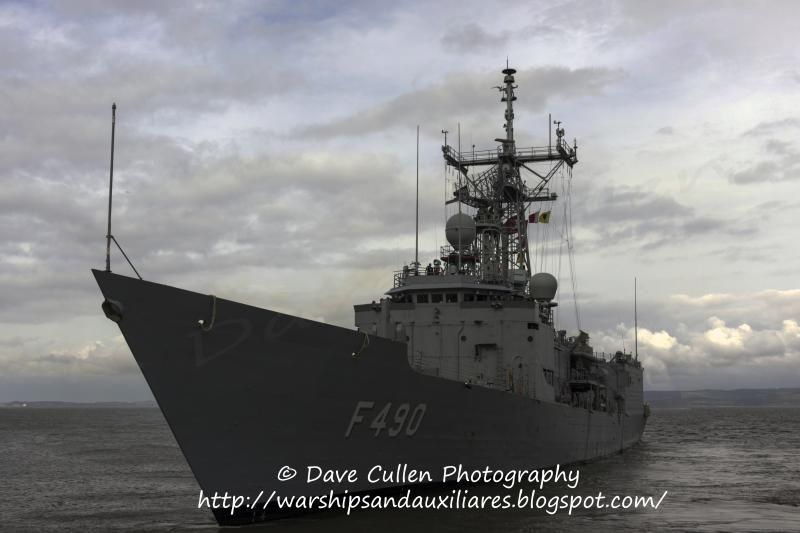
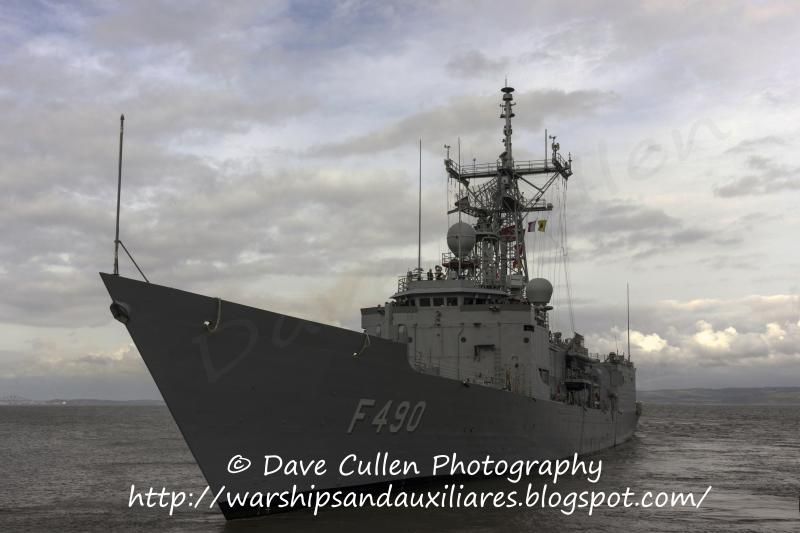
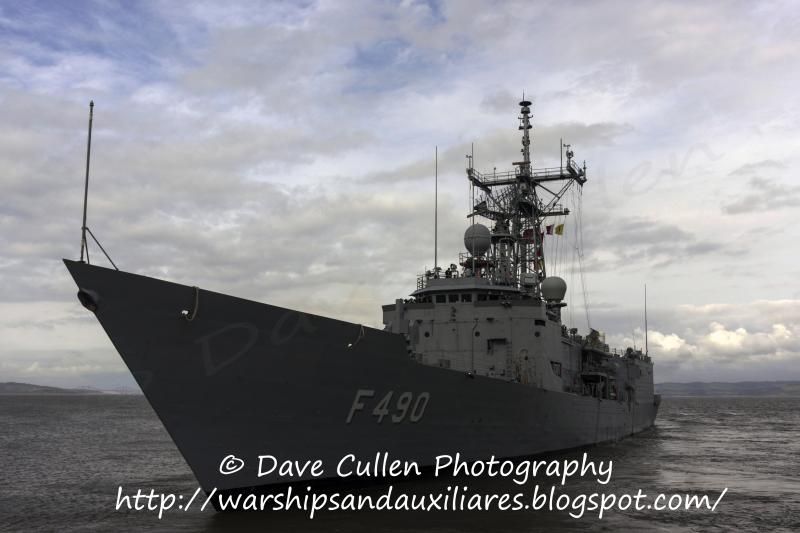
Joint Warrior 14-1 TCG Gaziantep


G-class frigate

The G class is one of the frigate classes of the Turkish Navy. They are extensively modernised versions of ex-Oliver Hazard Perry class guided-missile frigates, mainly designed for air defence with a weapons configuration that is optimized for general warfare.

Ships
TCG Gaziantep (F-490) ex-USS Clifton Sprague (FFG-16)
TCG Giresun (F-491) ex-USS Antrim (FFG-20)
TCG Gemlik (F-492) ex-USS Flatley (FFG-21)
TCG Gelibolu (F-493) ex-USS Reid (FFG-30)
TCG Gökçeada (F-494) ex-USS Mahlon S. Tisdale (FFG-27)
TCG Gediz (F-495) ex-USS John A. Moore (FFG-19)
TCG Gökova (F-496) ex-USS Samuel Eliot Morison (FFG-13)
TCG Göksu (F-497) ex-USS Estocin (FFG-15)

TCG Gaziantep is seen here arriving Leith 28th March 2014, she is the first Turkish warship to visit Edinburgh.